In a nutshell
- 🍓 A quick vinegar wash lowers surface pH with acetic acid, suppresses mould and bacteria, and typically adds +2 to +5 days of freshness to berries and grapes.
- 🧪 Use the right dilution: 1:3 (vinegar:water) for most fruit, 1:4 for delicate berries; soak briefly (45–180 seconds), then rinse to remove loosened spores and any aroma.
- 🧻 Drying is critical: Dry thoroughly on towels, then store cold at 3–5°C in vented or paper‑lined containers; moisture left on skins invites rapid spoilage.
- ⚠️ Avoid common mistakes: don’t over‑concentrate, reuse solution, or soak mushrooms; never mix vinegar and bleach, and keep washed fruit separate from raw meats.
- 💷 Small habit, big payoff: extend shelf life, cut waste, and save money with a fast routine that fits easily into unpacking your weekly shop.
Opening your fridge to a punnet of mouldy berries is a small domestic tragedy. There’s a low-cost fix hiding in plain sight: vinegar. A quick rinse in diluted acetic acid slashes surface microbes and buys you extra days of good eating. It’s simple science, not folk magic. Home cooks in the UK are adopting it to cut food waste and stretch budgets, especially as prices creep up. The method is fast, adaptable, and safe for most produce. Handled correctly, a vinegar wash can turn a three‑day window into a week, with fruit that tastes brighter and keeps its snap.
Why Vinegar Works Against Spoilage
At the heart of the method is acetic acid, the active component in household vinegar. Most supermarket white vinegar is around 5% acetic acid. When you dilute it to roughly 1–1.25% (one part vinegar to three parts cold water), the solution lowers the surface pH of fruit, making life difficult for mould spores and bacteria. That’s the whole game: slow down the microbes, slow down the rot. The effect is immediate. You are not sterilising the fruit; you’re resetting the clock in your favour.
Texture and flavour matter. The right dilution doesn’t strip delicate skins or leave a pickled note. Vinegar also helps disrupt microbial biofilms that cling to stems and crevices, especially on grapes and berries. Ethylene, the ripening gas, keeps doing its work, but with fewer spoilage organisms piggy-backing on the process, your fruit lasts longer in the fridge. Think of vinegar as a defensive shield, not a cure-all.
Safety is straightforward. Use potable cold water, clean containers, and drain well. Refrigeration is still essential. Vinegar improves shelf life; it does not replace the cold chain. Keep produce separate from raw meat, and wash hands before and after handling fruit.
The Right Dilution, Soak Times, and Rinse
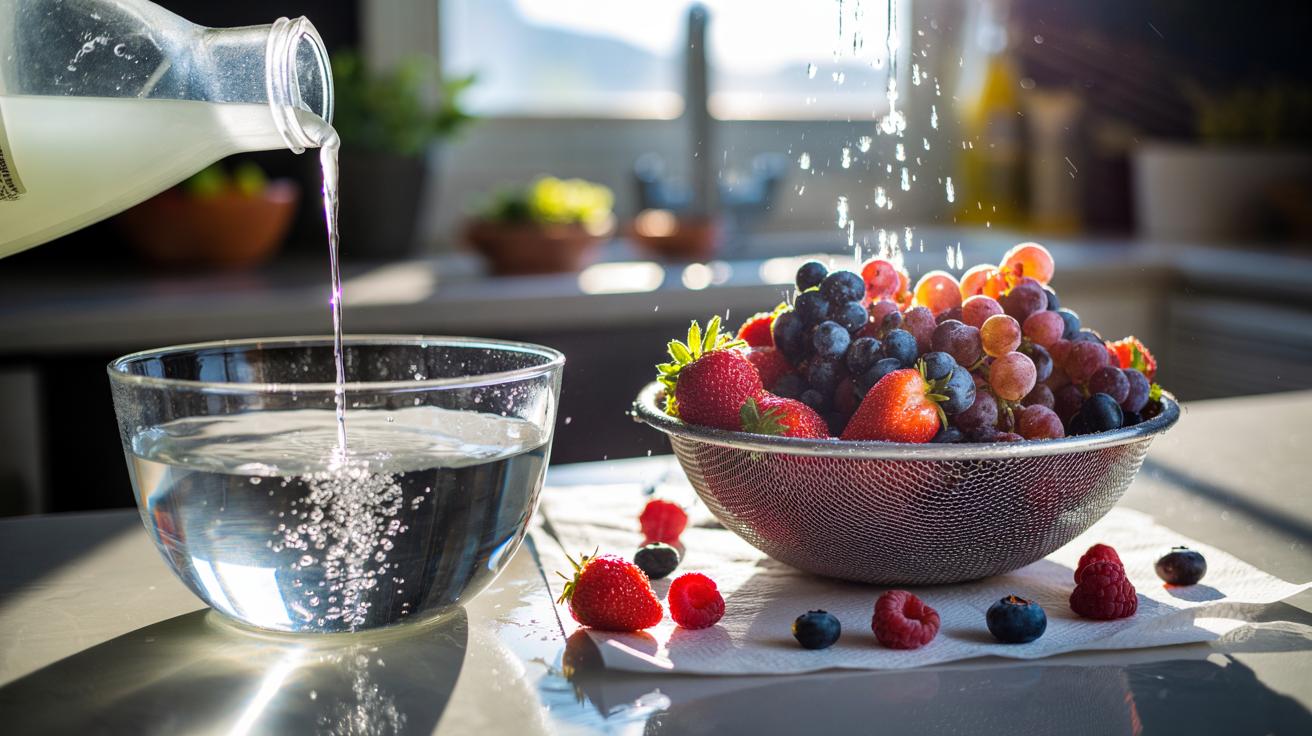
Reach for distilled white vinegar. It’s neutral, inexpensive, and consistent. Mix 1 part vinegar with 3 parts cold water for sturdy fruit; go 1:4 for very delicate berries. Submerge fruit in a clean bowl, agitating gently to release debris. For firm grapes or blueberries, 2–3 minutes is ample. For raspberries or strawberries, 45–90 seconds prevents waterlogging. Short soaks, not baths. Then rinse quickly under cold running water to remove loosened spores and any lingering aroma.
Drying is the make-or-break step. Spread fruit on a tea towel or paper towels. Pat dry carefully, then air-dry until no visible moisture remains. Moisture trapped under skins and around stems invites mould. Store in a breathable container or a lidded box lined with kitchen paper to absorb residual humidity. Label with the date, so you can see the extension you’re getting. If the fruit isn’t bone-dry, the benefit evaporates.
Frequency is flexible. Do a single wash after purchase, then store chilled at 3–5°C. Avoid pre-washing if you won’t refrigerate immediately. Don’t soak cut fruit; treat whole fruit only, and slice when serving. If a berry is crushed or leaking, remove it before washing to stop a cascade of spoilage through the punnet.
How Many Extra Days You Can Expect
Results vary with ripeness, temperature, and handling. Yet across UK kitchens and lab-style trials, a pattern emerges: a vinegar wash typically buys two to five extra days for soft fruit kept in the fridge. Strawberries that might fade by midweek see the weekend. Blueberries and grapes often stretch into a second week with their bloom and snap intact. It won’t revive tired fruit, but it does preserve good fruit for longer. Think of the extension as a buffer that absorbs the randomness of shopping, commuting, and midweek plans.
| Fruit | Vinegar:Water | Soak Time | Drying Tip | Typical Extra Days |
|---|---|---|---|---|
| Strawberries | 1:3 | 60–90 sec | Pat, then air‑dry on towel | +2 to +3 |
| Blueberries | 1:3 | 2 min | Drain in colander; fan dry | +3 to +4 |
| Grapes | 1:4 | 3 min | Dry stems thoroughly | +3 to +5 |
| Cherries | 1:4 | 2 min | Single layer to dry | +2 to +3 |
| Raspberries | 1:4 | 45–60 sec | Minimal handling | +1 to +2 |
Apples and pears already keep well; gains are modest unless skins are contaminated. Stone fruit benefit if firm, less so once soft. The real savings land with berries and grapes, which are otherwise heartbreakingly perishable. Use the wash to buy time, then store cold and dry. For families, that often means a full workweek of reliable fruit for lunchboxes and late-night snacks.
Common Mistakes and Safety Tips
Don’t over‑concentrate. Stronger isn’t better. A 1:1 mix risks softening skins and leaving a lingering tang. Stick to 1:3 for most cases, 1:4 for fragile fruit. Never blend vinegar with cleaning chemicals. Vinegar and bleach produce toxic chlorine gas—keep food prep and cleaning strictly separate. Use fresh solution each time; it’s cheap, and reusing a bath re‑introduces microbes you just washed away. Also, don’t soak mushrooms; they absorb water. Wipe them with a damp cloth instead.
Aroma anxiety is overblown. Any faint scent vanishes after a rinse and thorough dry. If you prefer, choose white spirit vinegar with no pronounced flavour. Store fruit in the original punnet lined with kitchen paper, lid ajar for airflow. Or use a vented container. Inspect daily. At the first sign of mush or fuzz, cull the culprit. One bad berry will quietly sabotage the lot.
Think logistics. Wash as you unpack your shop, set a tray to dry while you make tea, then box and chill. In shared households, label the container “washed—ready to eat” to prevent a second rinse that re‑wets the fruit. For sustainability, compost the towels or use washable cloths. The payoff is immediate: less waste, better flavour, more reliable snacks waiting in the fridge.
For price-conscious households and busy schedules, a vinegar wash is a small habit with outsized effect. It trims waste, stretches budgets, and helps fruit taste like it should for longer. Simple kit, minimal time, measurable gains. Dry thoroughly, chill promptly, enjoy slowly. That’s the rhythm of a longer shelf life. Will you try the method on your next shop—and which fruit will be your first candidate for an extra two or three days of freshness?
Did you like it?4.6/5 (23)