In a nutshell
- 🌿 Acetic acid strips the leaf cuticle and denatures proteins, causing rapid desiccation so weeds visibly wilt within hours—fastest in bright sun; quick scorch is not a permanent kill.
- 🧪 Vinegar is a non-systemic, contact herbicide; it burns what it touches but rarely kills roots, so persistent perennials need repeat treatments and pairing with hand-weeding or mulching.
- ⏱️ Match strength to the task: 5% household for seedlings, 6–8% for established annuals, 10–20% for tough path weeds; apply on warm, dry, windless days with a surfactant—and avoid salt.
- 🎯 Use precision tactics: bruise thick leaves, spray to saturation with coarse droplets, shield ornamentals, revisit in 3–5 days, and combine with boiling water in cracks and post-burn root removal.
- 🛡️ Prioritise safety and UK law: wear PPE, never mix with bleach, protect stone/metal, and note that household vinegar isn’t an authorised pesticide—check HSE/CRD for approved acetic-acid products.
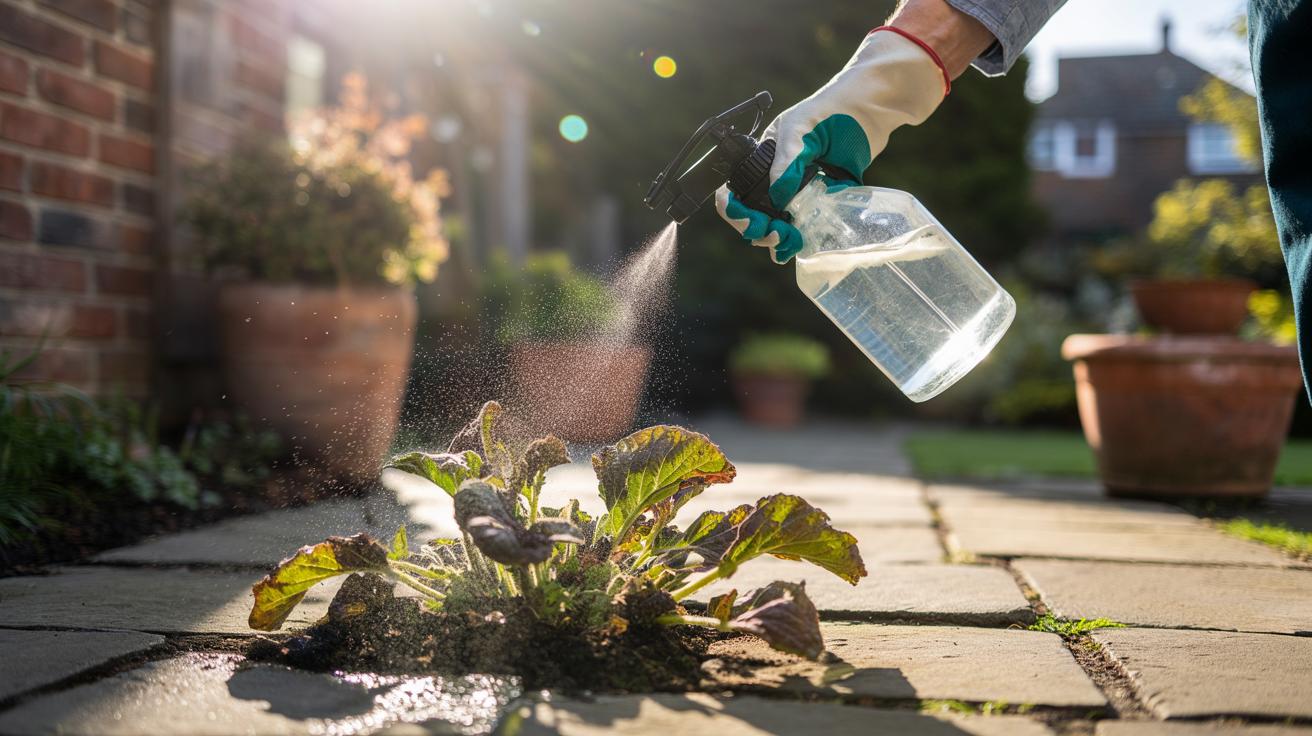
Within hours of a hot, dry day, a spritz of ordinary vinegar can turn glossy green weeds the colour of toast. It looks like magic. It isn’t. It’s chemistry, timing, and technique working together. Home gardeners across the UK are rediscovering acetic acid as a fast-acting, contact weedkiller for patios, paths, and gravel drives. Used precisely, it sears leaves and stems, collapsing cells so the plant wilts visibly before tea. Misused, it scorches the wrong plants, misses the roots, and the weeds bounce back. Here’s why vinegar works so quickly—and how to harness that speed without collateral damage to lawns, borders, or the soil beneath your feet.
How Acetic Acid Torches Weeds So Fast
Vinegar’s power comes from acetic acid, a small molecule that disrupts plant cells on contact. It dissolves the waxy cuticle, punches through membranes, and acidifies the cytoplasm, denaturing proteins. In plain English: it strips the leaf’s protective coat and causes catastrophic desiccation. That’s why leaves crumple within hours on a bright afternoon. Direct sun acts like a multiplier, driving faster water loss and intensifying the burn. Expect the quickest results on small, tender annuals with thin cuticles—seedlings, chickweed, young dandelion rosettes. Thick, mature foliage resists longer.
Crucially, vinegar is a non-systemic, contact herbicide. It doesn’t travel down into roots the way a systemic like glyphosate does. What you hit is what you hurt. The top growth dies, the underground stores often live. That’s the catch. Perennials with taproots or creeping rhizomes—dandelion, couch grass, bindweed—may look defeated by dusk, then push up fresh leaves days later. Speedy scorch is not the same as permanent kill. Repeat treatments, timed when new leaves appear, can exhaust smaller perennials, but deep-rooted veterans usually demand persistence or spade work.
Choosing the Right Vinegar and When to Use It
Not all vinegars are equal in the garden. Standard white vinegar in UK kitchens sits around 5% acetic acid. “Cleaning vinegar” can be 6–8%. Specialist horticultural products range from 10% to 20% and are purpose-made for vegetation control. As strength rises, so does speed—and risk. Higher concentrations burn faster in cool or breezy conditions and bite into tougher foliage, but they can damage adjacent plants, scorch skin, and etch stone. Match the strength to the job, the weather, and your tolerance for drift. Warm, dry, windless days are best. Aim for late morning to mid-afternoon, when leaves are dry and stomata are open.
| Vinegar Type | Typical Result Time | Best Targets | Key Cautions |
|---|---|---|---|
| Household white (5%) | 3–12 hours visual wilt | Seedlings, young annual weeds | Contact only; roots survive; repeat often |
| Cleaning vinegar (6–8%) | 2–8 hours visible scorch | Established annuals, soft perennials | Greater drift risk; protect ornamentals |
| Horticultural acetic (10–20%) | 1–6 hours intense burn | Tough foliage on paths, gravel | Wear PPE; can etch stone/metal; check UK approvals |
Use a coarse spray setting to reduce mist and keep droplets where you point them. Add a few drops of biodegradable washing-up liquid as a surfactant to help the acid wet glossy leaves. Avoid recipes that add salt: it lingers in soil, harms structure, and can poison borders. Keep vinegar off lawns and prized perennials—its non-selective burn won’t spare them.
Application Tactics for Stubborn, Deep-Rooted Weeds
Persistent weeds require strategy, not just strength. Start by trimming or bruising thick leaves to crack the cuticle, then spray to saturation without runoff. For dandelions, cut the rosette low, wait 24 hours for soft regrowth, and hit the tender new leaves; repeat every time fresh foliage unfurls. Bindweed snaking through shrubs? Shield your spray with a bottomless plastic bottle used as a funnel, feed the vine inside, then mist. Precision beats brute force when ornamentals are inches away. Edges of gravel drives respond well to a 6–8% mix with surfactant, applied on a sunny, wind-free day. Return in 3–5 days to re-treat any green that dares reappear.
Do not chase runoff into beds. Vinegar is non-selective and will scorch whatever it touches. Pair treatments with physical controls: hand-lift taproots after a burn (when the crown is weakened), fork out couch grass rhizomes, and mulch bare soil to deny light to opportunists. Boiling water is a useful ally in cracks where roots are shallow. Expect a campaign, not a strike. Fast wilt within hours is your psychological win; lasting control arrives with repetition and good hygiene—no seeding, no survivors.
Safety, Law, and Environmental Footprint in the UK
Acetic acid is familiar but not harmless. Wear gloves and eye protection, especially above 5%. Keep pets and children away until leaves are dry. Never mix vinegar with bleach—this releases toxic chlorine gas. Protect metal furniture and stone; strong vinegar can corrode steel and lightly etch limestone or concrete pointing. Spray low and slow to avoid inhaling mist. Treat early or late to sidestep pollinators, and never hit blooms. As for the planet: acetic acid breaks down rapidly, leaving minimal residues, yet it can temporarily acidify the immediate surface. That’s why targeted, minimal volumes matter.
On legality, the UK requires that plant protection products sold as weedkillers are approved and labelled. Some horticultural acetic-acid products carry approvals; household vinegar is a food/cleaning product and is not authorised as a pesticide. If you choose to use it on your own property, you do so at your own risk—always read labels and check the HSE/CRD database when purchasing any weed-control product. For public or professional use, stick strictly to approved formulations. Label, strength, and method are your guardrails for safe, lawful, and effective control.
Vinegar earns its reputation because it’s swift, visible, and simple. Within hours, leaves collapse. Paths look tidy. Yet the chemistry that makes it fast also limits its reach: it burns what it touches and rarely fells deep roots. Pair it with sharp aiming, repeated hits, and solid garden hygiene, and it becomes a nimble tool in a broader, low-toxicity strategy. Leave it to do everything, and you’ll be back next week with the sprayer. Which weed on your patch calls for a smarter plan—and how might you combine speed, precision, and persistence to finally beat it?
Did you like it?4.6/5 (30)