In a nutshell
- 🌙 Apply at night to align with plant circadian rhythm; rice water acts as a prebiotic for microbes, boosting root activity and delivering subtle overnight results.
- 🧪 Rice water contains starches, trace minerals, and mild amino acids; it’s a gentle, low-cost tonic that complements—never replaces—your main fertiliser.
- 🥤 Prep safely: use fresh rinses or brief soaks, ferment carefully if desired, and always dilute; keep it unsalted, unscented, and use within 48 hours.
- ⏰ For best impact, water in the evening as a soil drench, pre-moisten very dry mixes, target the drip line, and avoid letting pots sit in saucer puddles.
- ⚠️ Avoid pitfalls: don’t over-concentrate, prevent anaerobic pockets and gnats, skip salted/oily cooking water, use weaker doses for succulents, and let observation guide frequency.
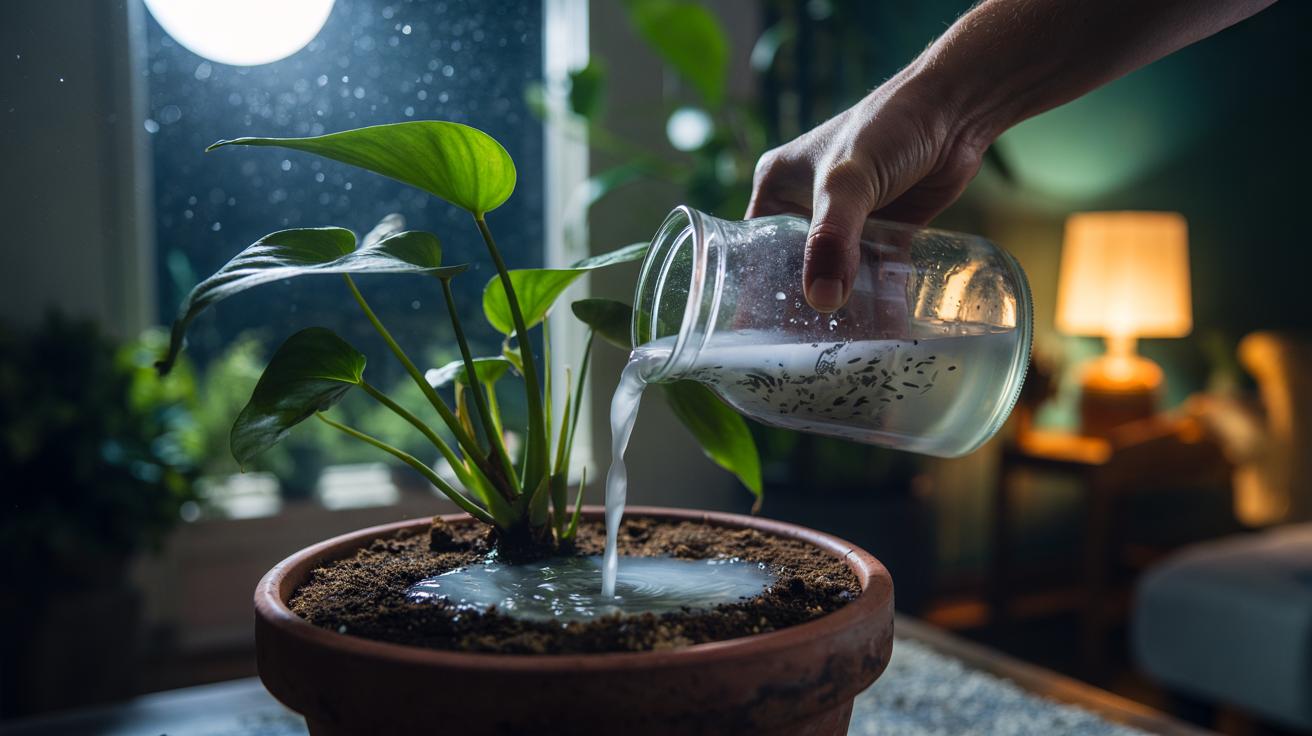
What if the by-product of washing your dinner could quietly supercharge your houseplants while you sleep? Rice water, the cloudy liquid left after rinsing or soaking uncooked grains, is far from waste. It’s a gentle, low-cost tonic that can encourage stronger roots and brighter growth. Apply it in the evening, let biology do the rest. By morning, many gardeners report perkier leaves and improved turgor. The science is simple, the practice even simpler. Night-time is when plants redistribute sugars, roots get busy, and soil microbes feast. Here’s how to use rice water safely, why it works, and when to expect those hush-hush overnight gains.
Why Rice Water Primes Roots Overnight
Plants keep time. Their circadian rhythm shifts activity below ground once daylight fades. At night, carbohydrates produced during the day are channelled towards roots, powering growth and repair. Introduce rice water in the evening and you provide a mild, starch-rich feed precisely when roots and beneficial microbes are most receptive. Cooler night-time temperatures slow evaporation, so moisture stays near the root zone for longer. That extra contact time matters. It allows nutrients to diffuse, microbes to colonise, and soil particles to rehydrate evenly, especially in potting mixes that have become a bit hydrophobic.
There’s also a microbial story. Rice water isn’t a fertiliser in the conventional sense; it’s a prebiotic for the rhizosphere. Those suspended starches and trace compounds provide food for helpful bacteria and fungi that, in turn, unlock minerals and create growth-promoting by-products. Overnight, with less heat stress and gentle moisture, these allies multiply. By dawn, you’ll often see subtle changes: leaves sitting higher, a fresher sheen, soil that feels evenly damp rather than waterlogged. It’s not magic, it’s timing—stacking a small input with the plant’s own night shift.
What’s in Rice Water and How It Works
Rice water contains starches, tiny amounts of amino acids, B-vitamins, and trace minerals such as phosphorus, potassium, and magnesium. The concentrations are modest, but the form is useful: suspended particles that coat soil aggregates and slowly diffuse into pore spaces. Microbes convert some of this bounty into compounds that can mimic mild growth cues. Think small, steady nudges rather than a heavy feed. Used thoughtfully, it complements your main fertiliser rather than replacing it. The result is improved root hair activity, better nutrient uptake, and a more resilient soil food web.
Because it’s gentle, rice water suits many houseplants—herbs, leafy ornamentals, even seedlings—so long as it’s diluted and fresh. Avoid salted or oiled cooking water; those residues harm roots. Go for the first or second rinse of raw rice, or a short soak. If you ferment it for extra potency, manage it carefully: fermentation lowers pH and increases microbial load. Done right, it’s a boon. Done sloppily, it risks sour odours and oxygen-poor conditions. Plain, unsalted, unscented is the rule.
Safe Preparation and Dilution Ratios
Keep it simple. Rinse 1 cup of uncooked rice in 2–3 cups of clean water, agitate for 30 seconds, then strain. That cloudy liquid is your concentrate. For a stronger brew, soak the rice for 20–30 minutes. For a fermented version, leave the strained liquid loosely covered at room temperature for 24–36 hours until it smells faintly tangy, then refrigerate and dilute more heavily. Always dilute before applying to soil. When in doubt, go weaker. Your plants and their microbes prefer little-and-often to one heavy splash.
| Method | Typical Dilution | Frequency | Best For | Risk Level |
|---|---|---|---|---|
| Fresh rinse (quick wash) | 1:2 to 1:4 (rice water:clean water) | Weekly | Most houseplants, seedlings | Low |
| Short soak (20–30 min) | 1:5 to 1:10 | Every 10–14 days | Leafy herbs, foliage plants | Low–Medium |
| Fermented (24–36 hrs) | 1:10 to 1:20 | Every 2–4 weeks | Established, hungry plants | Medium |
Sniff test: pleasant or mildly tangy is fine; rotten or sulphurous means bin it. Store fresh rice water in the fridge and use within 48 hours. Avoid additives—no soap, no salt, no oils. If your tap water is very hard, a splash of rainwater or filtered water in the final dilution helps keep pH in a friendly range.
When and How to Apply for Visible Morning Results
Timing is your secret weapon. Water in the evening, ideally 1–2 hours after sunset. That’s when evaporative loss is minimal and roots are active. Pre-moisten very dry soil with plain water so the rice water doesn’t race down gaps. Then apply your diluted mix as a soil drench, circling the pot’s edge and the drip line of larger plants. Aim for even coverage. Avoid wetting the foliage of fuzzy-leaved plants like African violets to prevent spotting. Never let pots sit in leftover liquid; tip out any saucer puddles to protect oxygen in the root zone.
How much? Enough to see a slow, steady trickle from the drainage holes—no more. Pair the treatment with good airflow and, if possible, slightly warmer roots than leaves; a heat mat on low helps propagation trays. Expect subtle but noticeable benefits by morning: perkier posture, a healthier sheen, soil that feels evenly hydrated. Use normal fertiliser on your usual schedule; rice water is a gentle adjunct, not the main course. If you’re cautious, try it on one plant first and compare.
Common Pitfalls and How to Avoid Them
Overdoing it is the classic mistake. Too concentrated, too often, and you risk anaerobic pockets and a gnats invitation. Stick to the table, observe plants, adjust. Discard any batch that smells off. Don’t use water that touched salt or oil—cooking water from seasoned rice is a no. Salt burns roots. Oil coats soil particles and disrupts gas exchange. For succulents and cacti, use much weaker dilutions, less frequently; their roots dislike lingering moisture. In terrariums, skip rice water altogether—it’s a closed system, too easy to sour.
Compatibility matters. Pair rice water with a peat-free, airy mix that drains well. If fungus gnats appear, let the top 2–3 cm dry between waterings and consider a yellow sticky trap. Watch leaves: if tips brown after applications, pause and flush the pot with plain water. In outdoor beds, apply at dusk and follow with a light plain-water rinse to wash residue from mulch. Observation beats rigid rules; let plant feedback set your cadence.
Used with a light hand and good timing, rice water is a quiet ally. It feeds microbes, supports root hairs, and leverages the night to deliver small wins that add up. Budget-friendly, low risk, kind to beginners. The trick is dilution, freshness, and patience. Try it on a single plant this week and note the morning-after difference. Then build a routine that suits your collection and climate. What plant will you test tonight—and what will you look for when the sun comes up?
Did you like it?4.4/5 (27)