In a nutshell
- 🌱 Crushed eggshells deter slugs by creating an abrasive, drying barrier that disrupts their mucus glide; the key is texture—use coarse 3–8 mm flakes, not powder.
- 🛠️ Prep and apply correctly: rinse, dry, and crush into coarse grit; lay a continuous ring 3–5 cm wide and 0.5–1 cm deep, refresh after rain, and focus on seedlings, raised beds, and containers.
- ☔ Performance is weather-dependent: highly effective in dry spells but weaker in wet, humid UK nights; treat eggshells as a situational tool that buys time during plant establishment.
- 🧰 Combine tactics for reliability: pair shells with copper tape, ferric phosphate pellets, beer or wool traps, and nematodes; also encourage predators and reduce slug refuges.
- ♻️ A wildlife-friendly win: turn kitchen waste into practical defence without altering soil pH meaningfully; monitor results and adapt your mix as pressure changes.
Every gardener has battled the midnight munchers. Slugs and snails leave ragged crescents in lettuce, perforated petals on prized delphiniums, and morale in tatters by dawn. Enter a scrappy ally from the breakfast table: crushed eggshells. Their rough edges, calcium content, and dryness are touted as a natural barrier. The promise is appealing. Waste becomes weapon. Cost is nil. And it fits neatly within a gentle, wildlife-friendly ethos. Used well, eggshells can tilt the odds against slugs during key plant-establishment phases. Used badly, they’re theatre. Here’s what the science, field experience, and UK conditions say about turning cartons into garden defence.
How Crushed Eggshells Disrupt Slug Behavior
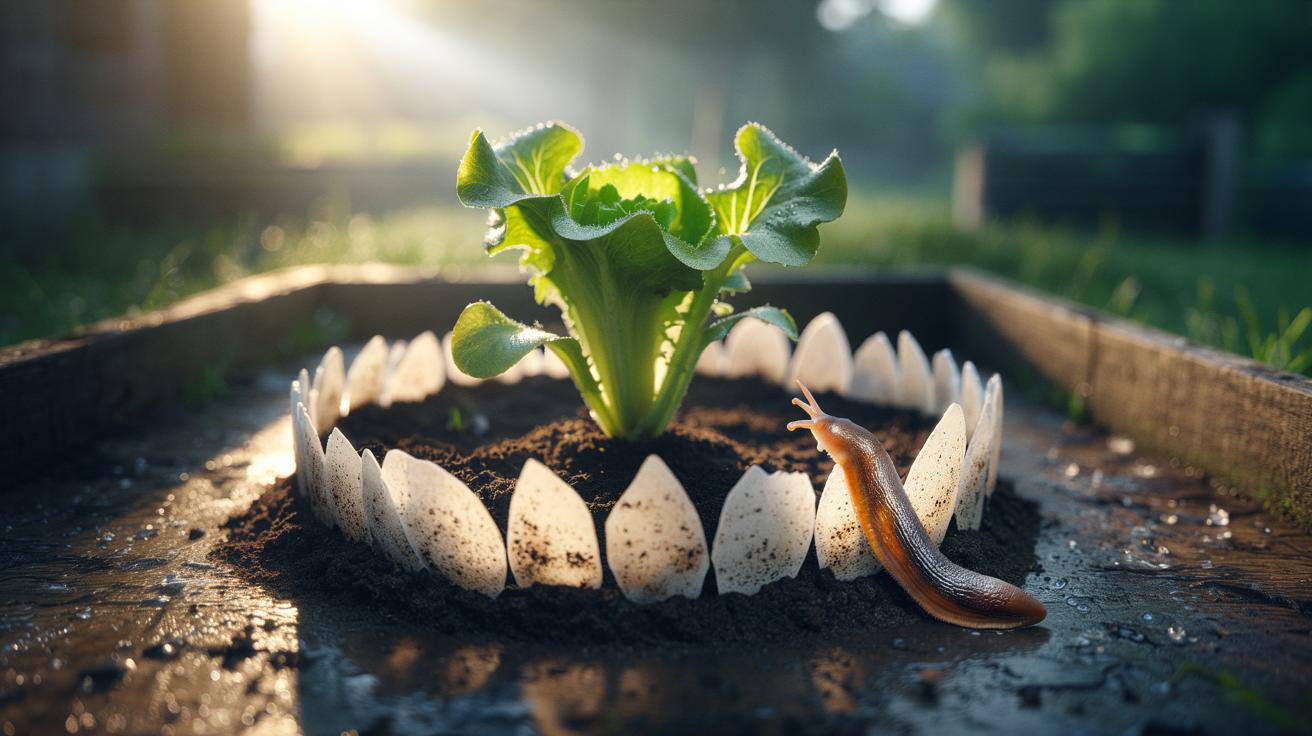
Slugs navigate on a carpet of mucus. It’s clever—and vulnerable. Break the glide and you break the raid. Coarsely crushed eggshells create a hostile texture: sharp micro-edges that scuff the slug’s foot and soak up slime, increasing friction and discouraging passage. There’s also the chemistry. Eggshells are largely calcium carbonate. While not a fast-acting “burn”, their dryness draws moisture; for soft-bodied grazers, that desiccating feel can be a powerful “no”.
Texture is the linchpin. Powdered shell is useless. It compacts and gets slick when damp. Gritty shards—think 3–8 mm flakes—maintain aeration and bite. In dry conditions, a tall, continuous ring of coarse shell can deter many slugs for long enough to save seedlings. In wet spells, performance drops sharply. UK nights are often humid; dew and rain re-lubricate the highway. That’s why gardeners report mixed outcomes: spectacular in a hot, breezy week; disappointing in a soggy April. The lesson is not to abandon the idea, but to deploy it where it shines—on raised beds, in containers, and during short, vulnerable windows.
Preparation and Application: From Kitchen to Bed
Rinse your shells. Then dry them thoroughly—either air-dry on a sunny windowsill or bake for 10 minutes at low heat to sterilise and crisp. Crush by hand in a bag, or pulse in a processor for a controlled, coarse grit. Avoid dust-fine powder. Aim for flakes that look like broken sea salt. Consistency matters: mixed sizes knit together yet stay jagged.
Lay a continuous ring around each plant, 3–5 cm wide, with a depth of 0.5–1 cm. Patch every gap. Bridges invite intruders. Refresh after heavy rain or when shards compact into a mat. For rows of greens, run a band either side of the drill; for containers, circle the inner rim where slugs approach. Eggshells break down slowly and add trace calcium, but they are not a meaningful fertiliser. Nor do they significantly raise soil pH in the short term. Store spare shells dry. They’ll last, and you’ll have a ready cache when seedlings go out. Pair eggshell rings with vigilant evening checks in peak slug season for best effect.
Evidence, Limits, and Smarter Combinations
Garden lore is persuasive. Trials are sobering. UK tests, including assessments aligned with RHS advice, find eggshell barriers inconsistent—particularly when damp. In controlled setups, slugs often cross unless the layer is thick, fresh, and dry. Still, field gardeners observe fewer bites on seedlings in raised beds protected by gritty, regularly topped-up shells. The take-away: eggshells are a useful but situational tool, not a silver bullet.
Blend tactics. Copper tape around pots disrupts the slug’s electrical balance. Ferric phosphate pellets are wildlife-safer than metaldehyde and work well when used sparingly. Beer traps draw local slugs but need frequent emptying. Wool pellets create a prickly, water-retentive collar. And biological control—nematodes—makes sense once soil is above 5–10°C. Meanwhile, attract allies: frogs, toads, ground beetles, hedgehogs, and thrushes. Reduce daytime hideaways like dense debris right beside salad beds. A small toolkit, deployed precisely, outperforms any one trick.
| Method | How It Works | Pros | Cons | Best Use |
|---|---|---|---|---|
| Crushed Eggshells | Abrasive, dry barrier | Free, recyclable, wildlife-friendly | Weak when wet; needs topping up | Seedlings, raised beds, containers |
| Copper Tape | Disrupts slug slime conductivity | Clean, long-lasting on pots | Cost; less effective when dirty | Pots, greenhouse staging |
| Beer Traps | Fermentation lure and drown | Simple, visible results | Non-selective; frequent maintenance | Localised hotspots |
| Ferric Phosphate Pellets | Ingested bait; wildlife-safer | Effective in damp | Use carefully; follow label | Beds during peak pressure |
| Nematodes | Parasitic biological control | Targeted, soil-wide | Temperature-sensitive; repeat needed | Spring–summer, moist soils |
Eggshells turn kitchen waste into practical defence, especially when used as coarse, dry, continuous rings and refreshed after rain. They shine in containers and raised beds, and they buy time for tender starts. Yet they’re only one piece of a resilient strategy that leans on habitat balance, barriers, baits used responsibly, and that old-fashioned torchlit patrol. Accept limits, stack methods, and you’ll see fewer leaf skeletons and more harvest. As nights warm and slug traffic builds, what mix of tools will you trial first, and how will you measure which combination earns a permanent place in your beds?
Did you like it?4.7/5 (30)