In a nutshell
- 🧪 The bite of onions comes from volatile sulphur compounds (including syn-propanethial-S-oxide) that scramble insect navigation by masking host-plant scents.
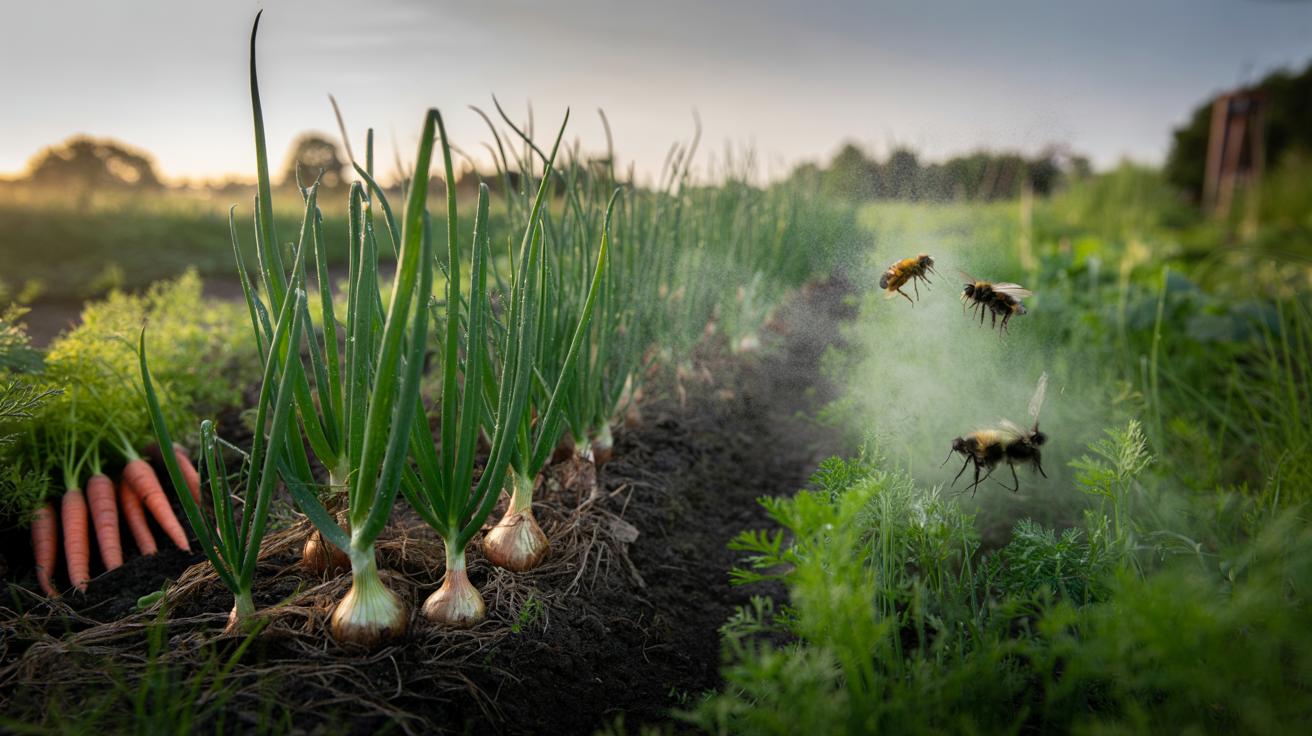
- 🛠️ Practical, pesticide-free tactics: companion planting onions between carrots, lettuces, and brassicas; hanging bruised-onion sachets and using a 1:10 diluted spray—refreshing every 5–7 days and avoiding flowers to keep pollinators safe.
- 🐛 Impact varies by pest: strong for carrot fly and useful against some aphids; limited for cabbage whites (netting still advised); minimal for slugs/snails; potential attraction for onion fly.
- 🌱 Works best as part of integrated pest management: pair with mesh covers, crop rotation, and habitat for beneficials to reduce reliance on synthetic pesticides.
- 🌦️ Conditions matter: wind and rain dilute scents, so consistency beats intensity—maintain spacing, airflow, and regular reapplication to keep an effective “odour fence.”
Waft a pan of onions across a kitchen and you’ll see eyes water. In the garden, that same chemistry does something far more useful: it unsettles insects. The familiar bite of a freshly sliced onion is powered by a suite of volatile compounds that confuse pests, mask the aroma of target crops, and discourage feeding without a drop of synthetic spray. For home growers trying to keep veg beds resilient and wildlife-friendly, onions offer a low-tech, high-impact ally. They don’t poison; they perturb. That distinction matters. It means you can protect seedlings, keep pollinators safe, and maintain a healthier soil web whilst avoiding the collateral damage of broad-spectrum pesticides.
The Chemistry Behind Onion Repellency
Cut or crush an onion and enzymes get to work. Alliinase snaps into action on amino acid precursors known as S-alk(en)yl-L-cysteine sulfoxides, producing reactive fragments that rapidly form thiosulfinates and other volatiles. One star is syn-propanethial-S-oxide, the lachrymatory factor that brings the tears; others include allyl and propyl sulphur compounds that insects find deeply unappealing. Together, these volatile sulphur compounds create an odour plume that can scramble an insect’s sense of direction. Many garden pests locate hosts by tracking a bouquet of plant signals. The onion’s sharp signature overlays that bouquet, blurring it like static over a radio.
In practice, this means two mechanisms kick in. First, there’s masking: the onion scent dilutes or disrupts cues from nearby crops, so carrot flies or aphids struggle to lock on. Second, there’s deterrence: the compounds themselves can signal a risky or unsuitable meal, prompting insects to move on. Onion scent repels and confuses; it does not exterminate. That subtlety is why it pairs well with other gentle tactics—barriers, timing, and biodiversity—to reduce pressure without creating resistance or harming beneficials.
Simple, Non-Pesticide Tactics for Gardeners
Start with companion planting. Thread rows of onions between susceptible crops—carrots, beetroot, lettuce, brassicas—at a ratio of roughly one onion for every 20–30 cm of row. The goal isn’t mass planting; it’s creating intermittent “odour fences” that break up the scent trail pests follow. For pots or small beds, tuck spring onions around the rim to radiate aroma at nose level for low-flying insects like carrot fly. Keep spacing generous so airflow carries volatiles across foliage.
Next, deploy a fresh-cut boost when pressure spikes. Dice a few onion bulbs or use a handful of skins, bruise them, and place the material in breathable sachets (old muslin works) hung at canopy height. Replace every 5–7 days, or after heavy rain, to maintain a consistent signal. For a light-touch foliar deterrent, blend one onion with water, strain, and dilute 1:10; mist onto leaves in the evening, avoiding blossoms to protect pollinators. Consistency beats intensity: refresh scent sources regularly.
Finally, integrate with physical and timing tactics. Use fine mesh over carrots at sowing, then rely on onion volatiles as your second line once covers come off. Water at soil level to preserve aroma; deluging foliage speeds dissipation. Rotate beds so alliums don’t follow alliums, and keep onions healthy—stressed bulbs release fewer useful volatiles and can invite their own specialist pests. This is gardening as choreography, not combat: a nudge here, a hint there, a steady background of confusing scent.
What Really Works: Pests, Benefits, and Limits
Onion scent is not a silver bullet, but it is a reliable, low-risk reducer of pest landings and feeding. Expect the strongest effects where insects rely heavily on olfactory cues and fly low to the ground. You’ll often see fewer initial landings, shorter probing, and a measurable drop in damage on neighbouring crops. However, chewing caterpillars already on plants, slugs and snails, and specialist allium pests are a different story. They won’t be fazed by onion perfume. Use onions to prevent arrivals, not to evict entrenched feeders.
| Pest | Likely Impact of Onion Volatiles | Notes |
|---|---|---|
| Carrot fly (Psila rosae) | Good masking, fewer landings | Best with interplanting and mesh at sowing |
| Aphids (various) | Moderate deterrence | Useful around lettuces, brassicas, roses; combine with predators |
| Cabbage white butterflies | Low to moderate masking | Egg-laying may drop slightly; netting still advised |
| Thrips | Unreliable | Alliums can host thrips; don’t rely on onion scent here |
| Slugs and snails | Minimal effect | Use barriers, traps, habitat tweaks |
| Onion fly | May be attracted | Rotate crops; avoid damaged bulbs; consider covers |
Weather matters. Wind disperses volatiles quickly, and heavy rain washes away surface residues, so reapply cut material after downpours. The good news: the approach is pollinator-safe when you avoid spraying flowers, and it supports a broader integrated pest management plan by reducing pesticide reliance. Think of onions as odour infrastructure—subtle, constant, and kind to the ecology that ultimately keeps your plot in balance.
Onions won’t turn a chaotic plot into a fortress overnight, but they will nudge the odds in your favour. They’re cheap, easy to deploy, and work quietly in the background, especially when combined with mesh, rotation, diverse planting, and a watchful gardener’s eye. Companion planting with onions also brings side benefits—space-efficient yields, fewer weeds around stems, and a touch of culinary insurance when harvests lag. Small changes, repeated, create resilience. As the season unfolds and pest pressures rise and fall, where could a thread of onion scent best weave through your beds to protect the plants you prize most?
Did you like it?4.5/5 (23)