In a nutshell
- 🌱 Onion water offers a quick, visible lawn refresh by leveraging mild organosulphur compounds that nudge microbes and clean leaf surfaces.
- 🧪 “Overnight greening” is mainly about hydration and optics, not deep nutrition; expect a fresher sheen rather than a fertiliser-level transformation.
- 🧅 Safe method: steep chopped onions, strain well, and apply a 1:10 to 1:5 dilution as a light foliar mist in cool parts of the day.
- 🌦️ UK-focused guidance: best in spring or early autumn; patch-test first, avoid heatwaves, and keep pets off until dry to minimise risks and odour.
- 🛠️ For lasting colour, pair onion water with core practices—aeration, correct mowing height, and balanced NPK feeds—using it as a timely accent, not the main act.
Brown patches biting into pride? A whiff of onions might be the unexpected fix. Gardeners across the UK are trialling onion water, a pungent homemade tonic said to coax lawns from tired olive to lively emerald in a single night. The claim sounds fanciful. Yet the mix of natural sulphur compounds, light potassium, and a fast foliar wetting effect can deliver a visible lift, fast. Not magic. Smart, tactical care. In this guide, I unpack the science, show a safe method, and set realistic expectations for British weather and cool-season grasses. It’s a quick spruce-up, not a substitute for long-term lawn nutrition.
The Science Behind Onion Water for Lawns
Onions are rich in organosulphur compounds that plants and microbes can exploit in tiny doses. When steeped in water, chopped bulbs release thiosulfinates and traces of minerals. Applied to turf, this solution acts as a light foliar tonic and a short-lived microbial nudge near the thatch layer. The immediate visual lift often reported as “overnight greening” typically stems from three effects: rehydration of leaf blades, removal of dulling dust so light scatters more evenly, and minor stimulation of chlorophyll activity under good light the next day. It is not a miracle fertiliser and contains negligible nitrogen compared to a balanced feed.
What about pathogens and pests? The same sulphur volatiles that make eyes water also have mild antimicrobial properties. That can help tip the balance against superficial leaf blemishes after a damp spell. But results vary with grass species and soil biology. UK lawns—usually perennial ryegrass, fescues, and bents—respond best when the turf is already healthy. Onion water is a finisher, not a foundation. Use it to freshen colour between standard NPK fertiliser applications, after mowing stress, or before a garden gathering when you want the sward to pop without heavy feeding.
How to Make and Apply Onion Water Safely
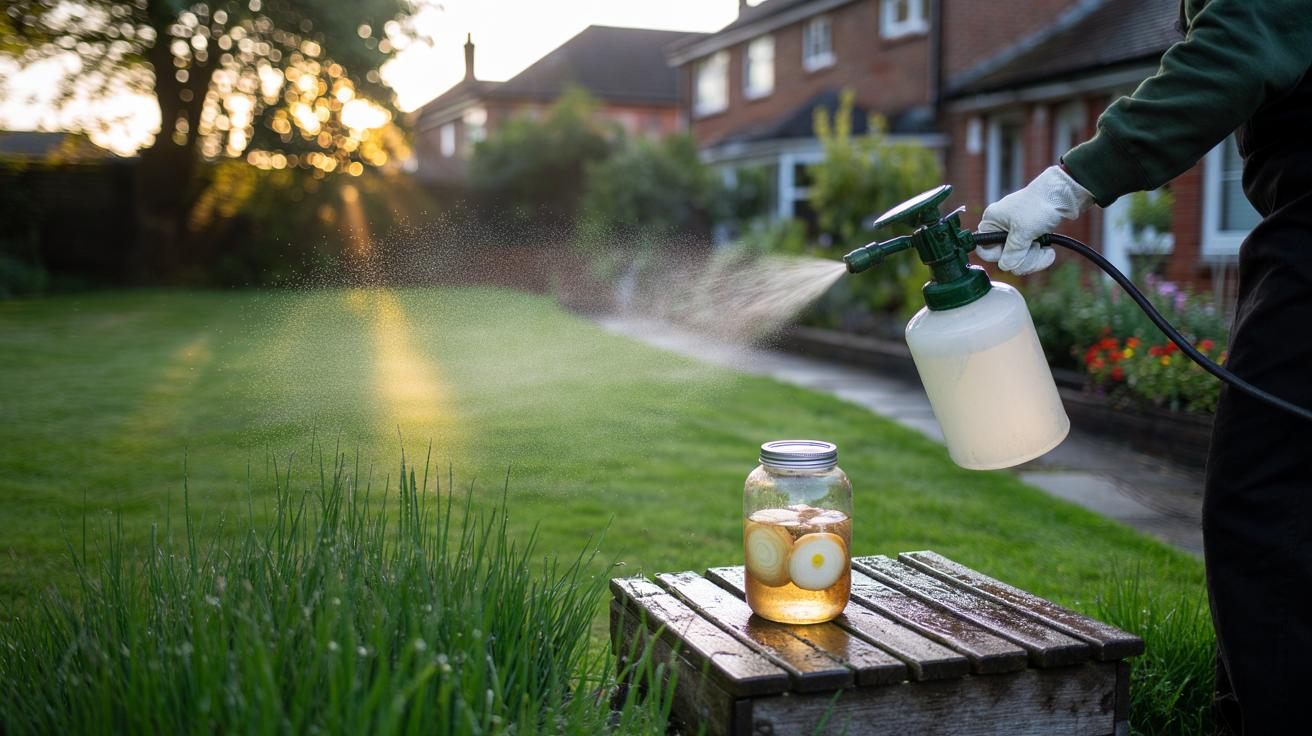
Start simple. Chop two medium onions per 5 litres of rainwater or tap water, then steep for 12–24 hours. Strain very finely—muslin or a coffee filter—so no pulp clogs your sprayer. Always dilute before use. Aim for a 1:5 to 1:10 concentrate-to-water ratio depending on lawn sensitivity and weather. Cool mornings or early evenings are best; avoid hot midday sun. Lightly mist the canopy until just shy of runoff. One pass only. Repeat no more than weekly during a short revival phase.
Here’s a quick reference you can pin to the shed wall.
| Dilution | Application | Frequency | Coverage (per 10 L) | Notes |
|---|---|---|---|---|
| 1:10 | Fine foliar spray | Every 7–10 days | Up to 100 m² | Safe starter dilution |
| 1:5 | Targeted patch spray | Every 10–14 days | Up to 60 m² | Use after patch test |
Pro tips: Mow a day before application to reduce leaf stress, not the same day. Rinse the sprayer immediately to banish the smell. Store concentrate no longer than 48 hours—beyond that, fermentation risks leaf scorch and nose-wrinkling odours. Keep pets off the lawn until it’s dry. If in doubt, dilute further. And remember: onion water complements a seasonal programme—scarifying, aeration, and a balanced spring/autumn feed.
What Turns Grass Green Overnight: Fast Mechanisms Explained
The phrase “greens up overnight” is less mystery, more physiology. Hydrated blades regain turgor, unfurl, and present a smoother surface that reflects light evenly—your eye reads that as richer colour. Fine mists also wash away dust and mildew films that mute the sward. A mild acidic solution, like onion water, can temporarily enhance micronutrient availability at the leaf surface. The cumulative effect is dramatic in the morning sun. Most of the overnight change is hydration and optics, not deep nutrition.
True nutrient-driven greening takes longer. Nitrogen foliar feeds show in 24–72 hours. Iron tonics can darken blades within hours, but onion water contains only trace iron. Expect a subtler lift—still noticeable on camera, striking to guests at dusk. For staying power, combine the tonic with good practices: mow at 4–5 cm for rye/fescue mixes, water deeply but infrequently, and feed with a slow-release fertiliser in spring and early autumn. If the lawn is thin, overseed first; no spray can paint over bare soil. Use onion water as a timely accent, not the main act.
Results, Risks, and Realistic Expectations in the UK Climate
British lawns live under changeable skies. Spring and early autumn are ideal windows: soil is warm, rain is helpful, and night temperatures steady. In summer heat, even diluted onion water can mark stressed turf; pause during scorchers above 26°C. In winter, cold slows response, so save your bulbs for the roast. Neighbours may notice the aroma for an hour—brief, but plan applications when windows are shut. Patch-test a square foot first and wait 24 hours; if tips brown, dilute more.
Wildlife concerns? Foxes might investigate but rarely damage turf; cats are indifferent. The bigger risk is human: over-application. Heavy soaking can invite thatch souring or leave residue on paving. Keep sprays on grass, not on stone. Replace onion water with a balanced programme when chasing long-term colour: aeration to relieve compaction, a light spring NPK, and an iron tonic if the soil test shows deficiency. Store onions and concentrates out of children’s reach. Finally, set your expectations: a fresher sheen, a touch deeper green, a lawn that looks “well” by morning. That’s the promise—credible, modest, and useful before a weekend gathering.
Used wisely, onion water is a thrifty, low-impact booster for UK lawns that crave polish between major treatments. It livens the canopy fast, encourages a cleaner leaf, and buys breathing room before your next scheduled feed. The secret is restraint: light mists, sensible dilution, and timing that respects weather and grass stress. Pair it with the basics—mowing height, aeration, and steady nutrition—and results stack. Ready to try the overnight test on a small patch this week, and note what your lawn tells you by morning?
Did you like it?4.7/5 (26)