In a nutshell
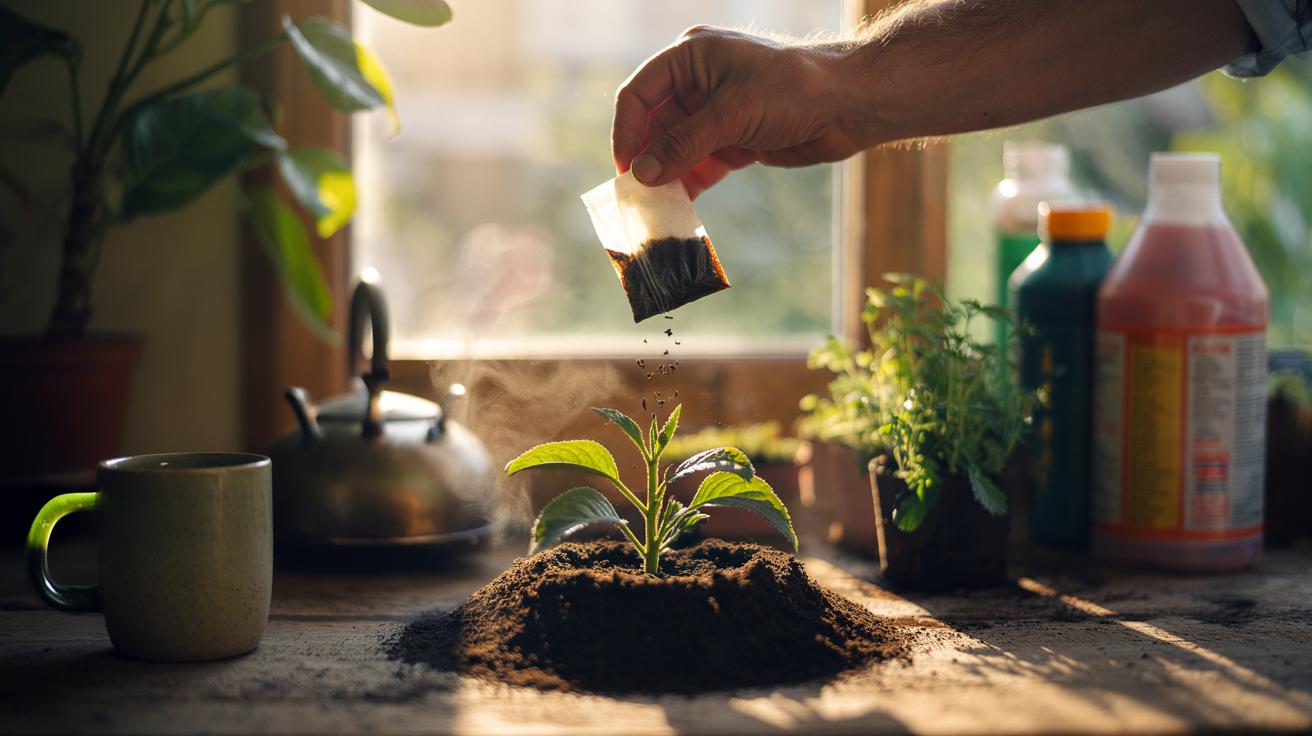
- 🌱 Spent tea leaves act as a slow-release fertiliser rich in N, K, and polyphenols, boosting plant growth while nurturing soil life.
- 🧪 After brewing, microbes rapidly colonise the leaves, improving soil structure, water retention, and nutrient availability; tannins/caffeine are minimal and largely harmless.
- 💷 Compared with shop-bought feeds, tea delivers comparable seasonal results at near-zero cost, avoiding salt build-up and supporting living soils.
- 🛠️ For safe use: open bags, remove any plastic mesh/staples, mix into topsoil or compost (up to ~10% in potting mixes), avoid heavily flavoured blends, and apply lightly but regularly.
- 🌍 It’s circular nutrition: cuts packaging waste and transport emissions while turning everyday kitchen waste into resilient, biologically active soil.
Britain’s kitchens generate a quiet gardening powerhouse every morning. The humble tea bag, once steeped and cooled, doubles as a nutrient‑rich soil booster that rivals pricey, packaged feeds on both performance and principle. Gardeners report sturdier stems, deeper greens, and richer blooms after working spent leaves into beds and pots. That’s no accident. Tea is a cocktail of nitrogen, potassium, polyphenols and organic matter, all primed for slow release. Unlike many synthetic products that promise instant results, tea gently builds life in the soil. Used correctly, it nourishes plants and the ecosystem beneath them without the harsh peaks and troughs of shop‑bought fertilisers. The question is not if it works, but why it works so well—and how to use it safely.
What Makes Steeped Leaves Special
Inside every spent tea bag lies a compact pile of biologically active carbon and a generous pinch of nitrogen (N), the driver of leafy growth. The leaves also carry potassium (K) for flowering and fruiting, traces of phosphorus (P) for roots, and a host of micronutrients like manganese and zinc. Crucially, tea’s polyphenols and humic‑like substances act as natural chelators, helping roots access nutrients already present in your soil. That means less waste and more balanced feeding over time.
Because the leaves are partially broken down during brewing, their fibres decompose steadily once returned to the ground. This offers a slow‑release feed rather than a sugar rush. Beneficial microbes thrive on the carbon compounds, building stable soil aggregates that improve aeration and water retention. Compare that with salt‑heavy synthetics that can spike conductivity and scorch roots in dry spells. Tea leaves don’t just feed the plant; they cultivate the underground workforce that sustains it. For container gardeners, where nutrients leach quickly, that steady trickle is gold.
From Kettle to Compost: How It Works
The moment steeped leaves hit moist soil, microbes clock on. Bacteria and fungi colonise the fragments, metabolising cellulose and releasing soluble forms of N, P, and K. As they feed, they exude glues that bind particles into crumbs—classic crumb structure prized by allotmenteers. This microbe‑mediated cycle turns a kitchen by‑product into a living fertiliser factory, paced to the rhythms of your soil temperature and moisture.
Tannins and residual caffeine worry some gardeners. In practice, after brewing, concentrations are modest and become food for microbial guilds rather than toxins, especially when mixed into compost or topsoil. Any mild acidity can be a boon to ericaceous lovers—blueberries, camellias, azaleas—while neutral soils buffer the rest. The real engine, though, is the carbon‑to‑nitrogen balance. Tea sits in a sweet spot: carbon to support microbes, nitrogen to spare the plants from a deficit. Stir in the fact that each bag adds organic matter that sponges water and holds nutrients, and you’ve a recipe for resilience during heatwaves and downpours alike.
Beating Store-Bought Fertilisers on Value and Impact
Commercial fertilisers often deliver nutrients fast, but at a price: packaging waste, transport emissions, and the risk of salt build‑up that suppresses soil life. Spent tea leaves, by contrast, are local, low‑cost, and inherently slow‑release. They enrich soil biology while feeding plants—two wins in one handful. In trials and home plots, gardeners see comparable growth over a season, with better soil tilth and fewer lock‑out issues. Where synthetics chase instant colour, tea builds stamina. The economics are disarmingly simple: you’ve already paid for the brew.
| Source | Key Nutrients | Release Speed | Effect on Soil Life | Typical Cost |
|---|---|---|---|---|
| Steeped Tea Leaves | N, K, traces of P, polyphenols | Slow and steady | Feeds microbes; builds structure | Near zero (household waste) |
| Granular NPK | High N, P, K salts | Fast | Can suppress biology if overused | Moderate per application |
| Liquid Feed | Readily soluble NPK | Immediate, short‑lived | Neutral to negative at high doses | Higher over season |
There’s also the packaging angle. Millions of plastic tubs and bottles push up the true cost of “quick fixes”. Tea turns a waste stream into circular nutrition, trimming household spend and landfill alike. For urban gardeners, that’s sustainability you can measure in both pennies and petals.
How to Use Tea Bags Safely
Cool the bag, then tear it open. Some brands use plastic‑based meshes or staples; remove those and keep only the leaves. Work a small handful into the top 2–3 cm of soil around ornamentals, or layer thinly beneath mulch. For pots, mix with compost at up to 10% by volume to avoid clumping. Light, regular applications beat occasional heavy dumps. If you brew strong, consider diluting by blending with brown waste—shredded paper, dry leaves—to balance moisture and carbon.
Choose plain black, green, or white teas. Avoid flavoured blends heavy with oils or glittering additives. Herbal infusions are fine, though nutrient levels vary. Watch for mouldy odours; a sweet, earthy smell signals healthy breakdown, while sourness means soggy conditions—add dry material and aerate. Keep an eye on pH‑sensitive beds; if in doubt, compost tea leaves first for a month. Indoors, bury deeply to deter fungus gnats. With this rhythm, you’ll build a living substrate that feeds itself and your plants, season after season.
Turning yesterday’s cuppa into today’s plant tonic is practical, frugal, and oddly satisfying. You sidestep the harsh jolts of soluble salts and invest in soil health, which pays back with steadier growth and better water handling. For households, it’s a neat climate cut, too: less packaging, fewer miles, more value from what you already buy. The best fertiliser is often the one you’ve already got—and it comes with biscuits. What would your garden look like if every brew powered a bed, a balcony box, or a struggling houseplant, and which plants would you trial first with your next pot of tea?
Did you like it?4.5/5 (27)