In a nutshell
- 🍌 Banana peels act as a microbial banquet, rapidly releasing potassium and micronutrients; any “doubling” is a localised, near-root effect rather than a whole-bed overnight change.
- 🛠️ Best practices: chop and bury peels 5–10 cm deep, brew a 24–48 hr peel tea diluted 1:4 for quick K, or use compost/vermicompost for balanced, odour-safe nutrition.
- 🧪 The science: peels are potassium-forward with low nitrogen; microbes speed breakdown, improve nutrient cycling and cation exchange, but peels are not a complete fertiliser.
- ⚠️ Common mistakes: leaving peels on the surface attracts slugs, rats, and foxes; excessive K can hinder magnesium uptake; avoid anaerobic “banana water” that smells—compost it instead.
- 🌿 Strategy: pair peels with compost, balanced nitrogen sources, sensible watering, and soil cover; use quick boosts for containers or steady inputs to power the whole garden.
Across Britain’s back gardens, a humble kitchen scrap is making waves. The banana peel, once destined for the bin or compost caddy, is being championed as a swift tonic for weary beds and listless houseplants. Advocates claim it can “double soil nutrients overnight”. That exact phrase is punchy, perhaps too bold, yet there’s solid biology behind the buzz. When used wisely, peels feed the soil microbiome, spur the release of potassium, and nudge plants into livelier growth. Results can arrive quickly. Not magic, but microbiology at pace. Here’s what actually happens, how to apply peels safely, and the pitfalls to avoid if you want real, repeatable gains.
Why Banana Peels Feed Soil Life
A banana peel is less a fertiliser than a microbial banquet. Rich in potassium (K) and dotted with micronutrients such as calcium and magnesium, it’s a readily decomposable carbon source. Microbes flock to it. As they break the peel down, they release plant-available ions into the rhizosphere, often creating a short, localised pulse of nutrients. The headline promise of “doubling” reflects this concentrated, near-root effect rather than a literal, whole-bed transformation overnight.
In practical terms, potassium supports flowering, fruiting, and water regulation. Houseplants perk up, tomatoes colour more evenly, roses hold their petals longer. Yet the peel’s nitrogen content is modest, so growth spurts come less from leaf-making power and more from improved cellular function. Think of peels as a targeted booster, not a full NPK feed. On healthy loams, benefits arrive fast because thriving microbes act like a relay team, converting peel tissues into nutrients. On compacted or sterile media, the response is slower. In both cases, texture improves as decomposed fibres add a whisper of organic matter.
Practical Methods to Use Banana Peels
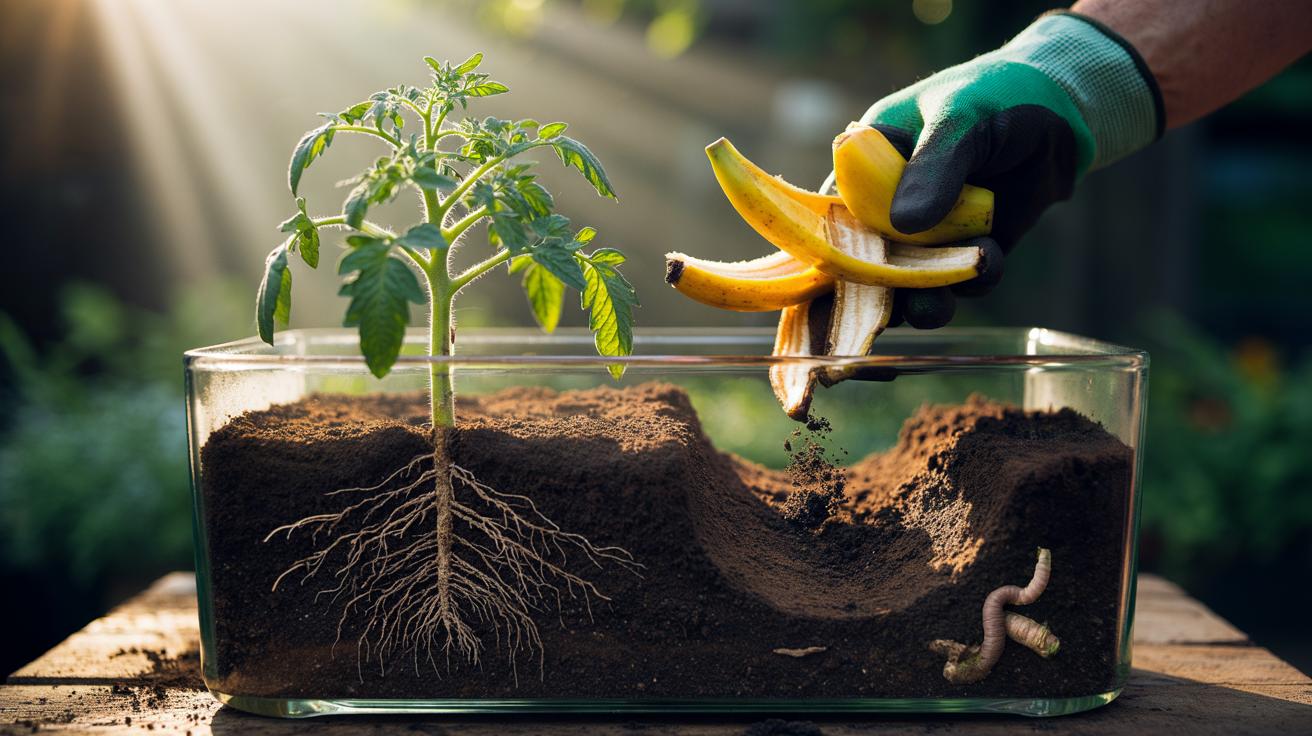
There are several good ways to harness peels without inviting pests or odours. For outdoor beds, chop peels into postage-stamp pieces and trench-bury them 5–10 cm deep near, not on, roots. This speeds decomposition and hides scent trails from foxes or rodents. For containers, slip a few small pieces below the mulch layer and water in; the microbe bloom will stay near the root zone. Never leave whole peels on the surface—this is a slug buffet and a wasp beacon.
Short on patience? Drop finely snipped peels into a jar of rainwater for 24–48 hours, then strain and dilute 1:4 to make a light peel “tea” for quick potassium. It’s mild, not a miracle, but it can pep up flowering plants mid-season. For the safest, most reliable result, add peels to your compost heap or a vermicompost bin; worms reduce smell, accelerate breakdown, and yield a balanced output.
| Method | Speed | Best For | Notes |
|---|---|---|---|
| Chop and bury | Fast (days–weeks) | Beds, borders | Hide 5–10 cm deep to deter pests |
| Peel “tea” (strained) | Very fast (24–48 hrs) | Containers, houseplants | Weak feed; dilute 1:4; avoid anaerobic stink |
| Compost/vermicompost | Moderate | All plants | Most balanced and odour-safe option |
| Bokashi pre-compost | Moderate–fast | Food-heavy bins | Finish in soil or compost to neutralise acidity |
What the Science Says About Nutrient Release
Analyses consistently show peels are potassium-forward with smaller amounts of phosphorus and scant nitrogen. In living soils, microbes deconstruct the peel’s simple carbohydrates first, then liberate K in solution where roots can sip it almost immediately. This is why a fresh, well-watered bury can feel dramatic within a day or two for flowering plants needing K. But “overnight” is a localised effect—most of your bed’s nutrient profile won’t truly double in 24 hours.
Lab studies and horticultural trials hint at nuanced benefits beyond raw NPK. Decomposing peels can nudge microbial diversity, improving nutrient cycling and subtly boosting cation exchange around root hairs. That, in turn, enhances uptake of calcium and magnesium while supporting better stomatal control under heat stress. Still, peels are not complete fertilisers. Without added nitrogen—from composted manure, alfalfa pellets, or a balanced organic feed—lush, sustained growth is unlikely. Use peels as part of an integrated programme: good compost, sensible watering, and soil cover. Measured this way, the “banana effect” is real, repeatable, and sensibly bounded by biology, not hype.
Common Mistakes and Safety Notes
Biggest error? Leaving peels whole and exposed. It attracts slugs, rats, and foxes, and delays breakdown. Second, overdoing it around fruiting crops: excess potassium can antagonise magnesium uptake, leaving leaves marred by interveinal chlorosis. If you’re feeding tomatoes heavily with K-rich potash, go gently with peels to avoid imbalances. Balance remains the gardener’s best fertiliser.
Another trap is the murky jar of “banana water” left fermenting for a week. That’s not extraction; it’s anaerobic soup. If it stinks, don’t pour it on roots—compost it. Wash peels if you’re wary of surface residues; UK-sold bananas are generally low-risk, but it’s prudent for houseplants. Drying peels in a low oven and crumbling them into soil reduces odour and speeds release. Indoors, bury pieces deeply to deter fungus gnats. Finally, remember that peels contribute little nitrogen; partner them with compost or a balanced organic fertiliser to sustain growth beyond that early potassium pop.
Used with intent, banana peels become more than a thrifty trick; they’re a gateway to livelier soils and sturdier, more floriferous plants. They tick the boxes for circular living, cost next to nothing, and teach the rhythm of decomposition at home. The headline about “doubling overnight” is best read as a spirited nudge toward fast, localised boosts—impressive, not mystical. With a few chops of the knife and a spade’s depth of cover, you can harness that boost without courting pests or imbalance. How will you fold peels into your growing routine this season—quick teas for containers, or a steady stream into the compost to power the whole garden?
Did you like it?4.4/5 (26)