In a nutshell
- ⚗️ Why it works fast: Baking soda (sodium bicarbonate) is mildly alkaline, nudging grease toward light saponification while its micro-abrasive crystals disrupt films; a vinegar spritz creates CO₂ fizz that agitates and lifts grime on warm surfaces.
- ⏱️ 5-minute method: Warm the oven, spread a baking soda + hot water paste with even coverage, optionally mist vinegar, wait five minutes, then wipe with a damp microfibre cloth and rinse to remove haze—avoiding elements and door vents.
- 🧼 Surface-specific tips: For stubborn spots, apply a thicker paste and extend dwell time; use a plastic scraper flat on door glass, treat enamel confidently, keep exposure brief on aluminium, protect rubber gaskets, and soak racks with baking soda and washing-up liquid.
- ♻️ Safety, cost, sustainability: No bleach or caustic fumes, eco-friendly and budget-friendly; ventilate while wiping, wear gloves if sensitive, decant into a shaker, and favour short repeat cycles over brute-force scrubbing.
- ✨ Everyday payoff: Tackle light grease in minutes between deep cleans, scaling from quick door-glass touch-ups to a full refresh, delivering quick results without harsh chemicals or heavy elbow grease.
It sounds like a hack, but it’s good chemistry: a spoonful of baking soda turns a tired oven from dulled to dazzling in minutes. When heat, steam, and a mild alkali meet yesterday’s roast splatter, the bond breaks quickly and safely. There’s no choking odour, no harsh residues, and no expensive bottle to buy. Used smartly, sodium bicarbonate lifts fresh grease and light grime in about five minutes—fast enough for a midweek reset, powerful enough for weekend deep cleans. Here’s how it works, why it’s gentle on enamel and glass, and the precise steps to make your cooker shine without scrubbing your knuckles raw.
Why Baking Soda Works in Minutes
Baking soda—properly, sodium bicarbonate—is a mild alkaline powder. That alkalinity matters: most oven mess is fatty, and alkalis initiate light saponification, loosening grease by nudging it towards soap-like fragments that rinse away. The powder’s crystals are also micro-abrasive, so they disrupt the slick film without gouging enamel or scratching oven glass. Add a little warm water and you get a slick, spreadable paste that clings to vertical surfaces and seals in moisture where you need it.
Introduce an acid spritz—white vinegar or lemon—and the fizz you hear is carbon dioxide being released as acid meets alkali. That effervescence isn’t just theatre. Tiny bubbles agitate the surface, lifting grime from micro-pits and corners around the oven door seal. A warm cavity heightens the effect by softening residues so the paste can reach underneath. Five minutes is often enough to break the bond between fresh grease and enamel, meaning the first wipe does the heavy lifting. For baked-on carbon, you’ll still benefit—just extend contact time.
Crucially, bicarbonate is low-risk for common oven finishes. It contains no bleach, no caustic soda, and no perfumes that linger. That’s why it’s the darling of allergy-aware households and renters who don’t want a deposit-shredding scratch job.
The 5-Minute Method Step by Step
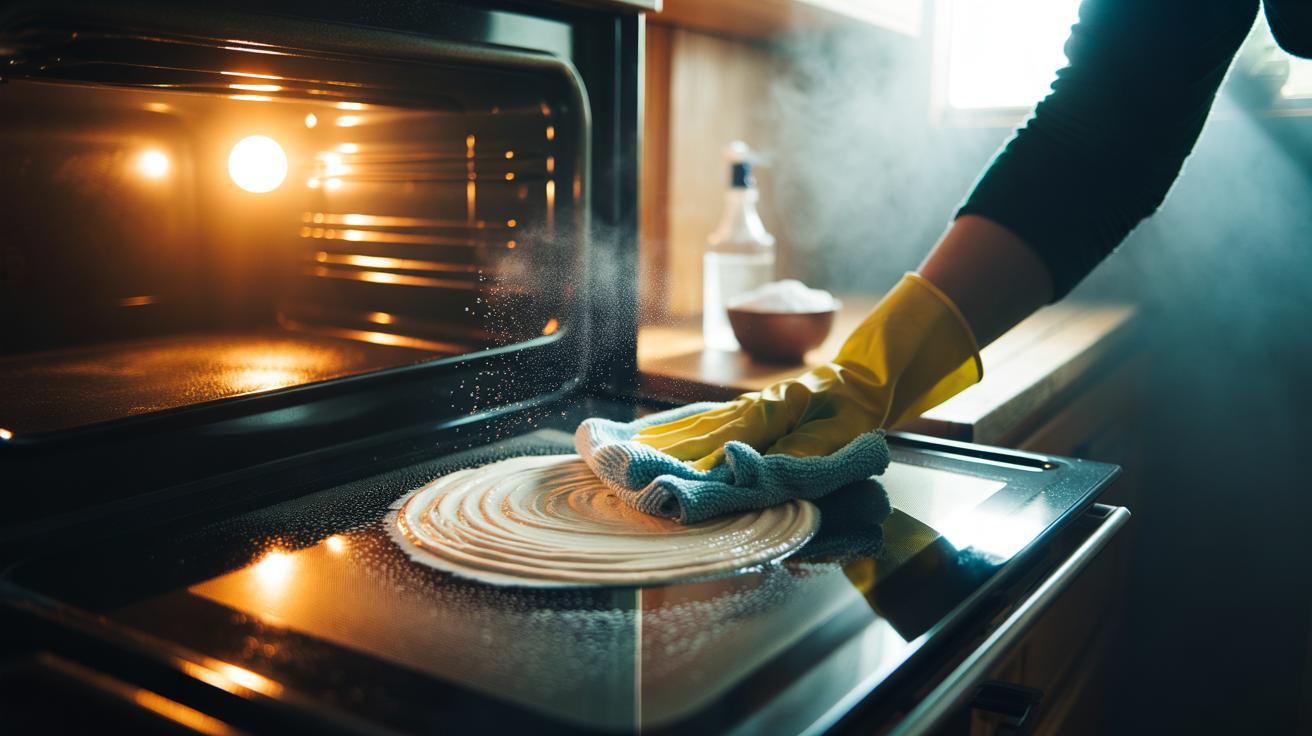
Start with a warm—but not hot—oven. Two or three minutes of preheat, then off. Remove racks if you can. Sprinkle 1–2 tablespoons of baking soda across the base and smudged side walls. Mist with hot water until the powder turns to a spreadable paste. On the door glass, target the greasiest bands near the bottom edge. Coverage is key: a thin, even film works faster than clumps. For a turbo boost, mist the paste lightly with vinegar; the fizz will settle in seconds.
Set a timer for five minutes. In that window, the alkali softens grease while bubbles pry it loose. Wipe with a damp microfibre cloth, rinsing and wringing often. Streaks? Repeat a brief spritz and wipe. Finish with a clean cloth and a final pass of warm water to remove any powder haze. Avoid drenching the heating element or fan housing, and don’t pack paste into door vents.
| Step | What to Use | Amount/Ratio | Time |
|---|---|---|---|
| Warm the oven | Preheat, then switch off | 2–3 minutes | Immediate |
| Apply paste | Baking soda + hot water | 1–2 tbsp; wet to paste | 1 minute |
| Optional fizz | Vinegar mist | Light spritz | 10–20 seconds |
| Wait | Let chemistry work | — | 5 minutes |
| Wipe and rinse | Microfibre cloth | Rinse frequently | 2–4 minutes |
Tackling Stubborn Spots and Different Oven Surfaces
Burnt-on carbon needs patience. Press a thicker paste onto the target, cover with a damp paper towel to prevent drying, and leave for 20–30 minutes—or overnight if it’s jet black. For racks, slip them into a sink or tub lined with a towel, add hot water, a shake of baking soda, and a dash of washing-up liquid; soak, then scrub with a non-scratch pad. Do not use abrasive pads on the door glass, which can haze irreversibly.
Glass responds brilliantly to a gentle paste and a plastic scraper held flat. Enamel interiors tolerate bicarbonate well; aluminium accessories can dull, so keep exposure brief and rinse quickly. Around rubber door gaskets, use a soft brush to keep paste out of creases, then wipe dry to preserve the seal. Fan-assisted ovens collect grease in seams; angle your cloth edge into the lip just inside the door frame. If odours linger after a spill, place a small oven-safe bowl with two tablespoons of baking soda inside during the cool-down to absorb smells.
If you use self-clean cycles, let the oven return fully to room temperature before any wet cleaning. And always patch-test if your cooker has special coatings marketed as “easy-clean” or catalytic, as manufacturers’ guidance varies.
Safety, Cost, and Sustainability Wins
Compared with caustic sprays, bicarbonate is gentle on lungs, pets, and the planet. There’s no bleach, and rinsed residue is benign in household waste water. A 500g tub from a UK supermarket costs a few pounds and lasts months. In a cost-of-living squeeze, a pantry staple that replaces specialty cleaners is a quiet victory. Keep ventilation going as you wipe—steam lifts more soil and speeds drying. Gloves help if you have sensitive skin, though most users won’t need them with a mild alkali.
Storage is simple: decant into a shaker to control dosage and reduce clumps. For scent, follow your final wipe with a lemon-water spritz; it won’t disrupt the clean and evaporates without residue. Dispose of greasy cloth rinse water down the sink with hot water and a drop of washing-up liquid. Finally, resist over-scrubbing: let chemistry do the work. If a mark doesn’t move in the first pass, reapply and give it time rather than grinding at the enamel. Repeat brief cycles beat brute force every time.
Baking soda earns its reputation because it’s quick, safe, and quietly effective. In five minutes, you can tackle light grease between big cleans; with longer contact, you can revive stubborn corners without fumes. The method scales, from tiny touch-ups on the door glass to a full-on refresh before guests arrive. Clean less, cook more, and keep your kitchen breathing easy. What part of your oven needs the fastest fix right now—the glass, the racks, or that one stubborn patch at the back, and which five-minute tactic will you try first?
Did you like it?4.7/5 (24)