In a nutshell
- 🧂 Salt’s osmotic action draws water from microbes and, with mild abrasion, helps reduce everyday bacterial loads in about 60 seconds.
- ⏱️ 60-second routine: Clean first, apply a 5–10% brine, keep the surface visibly wet for a minute, then rinse and dry thoroughly.
- ⚠️ Limits & safety: Not broad-spectrum; for high‑risk messes use certified disinfectants (BS EN 1276/EN 13697); avoid prolonged contact on aluminium or unsealed stone.
- 🧽 Where it shines: Sinks, drains, fridge shelves, seals, and wooden boards (with lemon) between deep cleans; degrease first for best results.
- 💷 Cost and sustainability: Cheap, low-odour, microplastic‑free scrubbing; dispose brine sensibly and use a layered approach—soap, salt, then disinfectant when needed.
Can humble table salt really blitz kitchen germs in under a minute? Used smartly, yes—at least for everyday messes. Salt is cheap, available in every cupboard, and surprisingly versatile. It draws water out of microbes, scrubs away grime, and partners well with a hot, soapy wash. That combination can slash bacterial numbers fast. Still, there’s nuance. Salt helps sanitise; it doesn’t replace a certified disinfectant for high-risk contamination. This guide shows you how to harness osmotic power and a brisk 60-second contact time to freshen surfaces, cut odours, and boost routine hygiene—while being frank about limits and best practice.
Why Salt Works Against Kitchen Germs
Salt is more than seasoning; it’s a traditional preservative because it creates a hostile environment for microbes. The science is straightforward. Through osmotic stress, concentrated salt draws water from bacterial cells, slowing growth or causing damage. On counters and boards, crystals also add a mild abrasive action that helps lift food soils where microbes hide. Give it time to act. A practical contact time of 60 seconds allows brine to wet the surface, disrupt some bacteria, and loosen residue for removal.
There are important caveats. Salt is not a broad-spectrum disinfectant and will not reliably inactivate all viruses, spores, or heavy biofilms. Think of it as a fast, low-cost sanitising aid in the cleaning sequence: remove debris, apply salt solution, wait a minute, then rinse and dry thoroughly. For raw meat spills or illness in the home, switch to a product meeting BS EN 1276 or EN 13697 standards, following the labelled contact time. Used judiciously, salt offers rapid gains on everyday splash zones—sinks, drains, and chopping boards—especially between deeper cleans.
The 60-Second Salt Routine, Step by Step
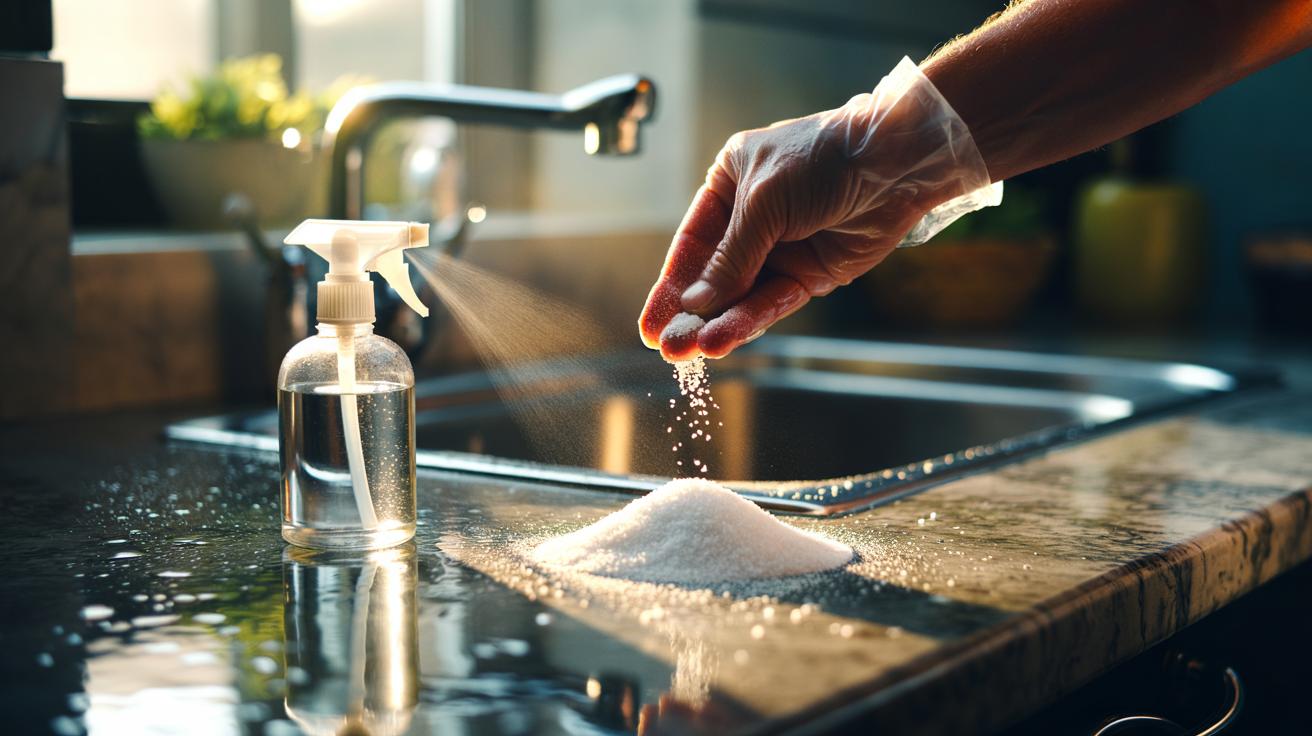
Start clean to get clean. Wash the surface with hot, soapy water to remove grease and crumbs; rinse. Mix a simple brine: 1–2 teaspoons of table salt per 100 ml warm water (a strong 5–10% solution). For light buildup on boards or sinks, sprinkle dry salt first for a quick scrub, then switch to brine to wet the area evenly. Ensure the surface stays visibly wet for 60 seconds. That minute matters: it maximises osmotic action and gives you time to agitate edges, grooves, and tap bases where microbes cling.
After 60 seconds, rinse with clean water and dry with a fresh cloth or paper towel—drying removes remaining moisture that nurtures bacteria. Take care with materials. Salt can pit soft metals and some stones; test inconspicuously and avoid prolonged contact on aluminium or unsealed marble. On wooden boards, salt pairs well with a cut lemon for deodorising, but always finish by drying upright. If the area touched raw poultry, eggs, or seafood, follow with an approved food-safe disinfectant at the stated contact time. Gloves help if you have cuts, as salt can sting.
Where It Shines—and Where It Doesn’t
Salt excels as a fast helper between deep cleans. It’s effective on odours, light bacterial loads, and damp-prone spots like sink strainers, silicone seals, and fridge shelves. The grain offers gentle scouring without microplastics, and the brine reduces reliance on harsher chemicals for everyday wipe-downs. But limits matter. Salt won’t reliably kill norovirus, Clostridium spores, or stubborn biofilms; it also underperforms on greasy films unless you degrease first. For high-risk messes—raw-meat juices, infant feeding gear, illness outbreaks—use a certified disinfectant or heat.
Quick comparison at a glance:
| Method | Typical Contact Time | Strength | Pros | Key Limitations |
|---|---|---|---|---|
| Salt Brine (5–10%) | 60 seconds | Moderate sanitising | Cheap, low odour, mild abrasive | Not broad-spectrum; can corrode metals |
| Bleach (EN 1276) | 1–5 minutes | High | Broad-spectrum, proven | Strong smell; can damage fabrics/surfaces |
| Hydrogen Peroxide | 1–10 minutes | High | Less odour, good on viruses | May bleach; needs correct strength |
| Heat (Boiling Water) | Immediate on contact | High | No residue, great for tools | Unsafe on electrics; scald risk |
Match the method to the mess: clean, then sanitise, then disinfect when risk demands.
Cost, Sustainability, and Everyday Pragmatism
There’s a frugal elegance to salt. A kilo costs little and lasts months, cutting your spend on single-purpose sprays. With no fragrance and minimal additives, it suits homes sensitive to strong chemical smells. The crystals offer microplastic-free scrubbing, and brine pours safely down drains in small quantities. Still, balance is key. Excess saltwater can corrode metals and isn’t ideal for houseplants or garden soil, so dispose sensibly and use just enough to wet the surface. Combine with habits that matter more than any product: clean cloths, good drying, and segregating boards for raw and ready-to-eat foods.
The smartest routine is layered: soap to lift grime, salt for a 60-second sanitising boost, and an EN-standard disinfectant when risk rises. It’s quick, clear-eyed, and kind to your budget.
Salt won’t replace your entire cleaning cupboard, yet it’s a nimble ally for rapid, everyday kitchen hygiene. Used with hot, soapy water and a disciplined one-minute contact time, it reduces bacterial loads, freshens drains, and keeps counters looking honest between bigger cleans. Respect its limits—especially around raw meat and illness—and it pays you back with reliability and pennies saved. Ready to try the 60-second brine on your sink, chopping board, or fridge shelf this week—and what spot will you test first?
Did you like it?4.4/5 (27)