In a nutshell
- 🥚 Eggshells act as a gentle micro-abrasive (rich in calcium carbonate) that softens light wood scratches by rounding edges and improving how surfaces reflect light.
- ⏱️ Quick 30-second method: crush dried shells to a fine powder, apply with a soft cloth, buff lightly along the grain, then wipe and finish with a clean buff.
- 🪵 Match to finish type: use a micro-drop of mineral/olive oil for oiled or waxed finishes, a drop of water for lacquer/poly; go dry or barely damp for shellac—always light pressure.
- ⚠️ Cautions: test first on an inconspicuous area, avoid high-gloss piano finishes and antiques, and remember this is for surface marks, not deep gouges.
- 🧼 Good practice: bake or air-dry shells for sanitation, keep powder clean, remove dust before buffing, and use feather-light pressure to prevent hazing.
There’s a frugal, oddly satisfying fix hiding in your breakfast: eggshells. For shallow scuffs and hairline abrasions on wood, their powdered surface can act like a salon-grade buff—quick, dry, and surprisingly gentle. In about 30 seconds, you can soften the look of an annoying mark and revive the sheen without resorting to harsh chemicals or a full refinish. The trick relies on a simple truth: micro-abrasion done right improves how light bounces off a surface. This is not a remedy for deep gouges, but for the cosmetic scratches that catch your eye and dull a tabletop’s charm. Here’s how, why, and when to use it.
Why Eggshells Work on Wood
An eggshell is largely calcium carbonate—around 95%—formed as microscopic crystals of calcite. On the Mohs scale, calcite sits near 3: hard enough to abrade finish irregularities a fraction, yet soft enough to stay gentle on coatings like shellac, wax, and many lacquers. In short, it’s a natural, ultra-fine micro-abrasive. When you massage a trace of powdered shell across a light scratch, you’re not erasing it so much as rounding the edges and levelling high spots that catch light.
That optical effect matters. Scratches read as lines because their sides reflect differently from surrounding areas. A few seconds of controlled, low-pressure buffing reduces that contrast. By changing how light scatters, the mark appears to fade even though almost no material is removed. The powder’s pale colour can look alarming on dark timbers, but paired with a drop of oil it binds, disappears, and leaves a subtle, renewed lustre.
There’s also the eggshell’s inner membrane. When dried and crushed with the shell, it behaves like a soft binder, giving the powder body so it clings to a cloth and doesn’t skate about. That makes the action less aggressive than sandpaper of similar fineness. Used with a light touch and along the grain, you’ll brighten a tired patch while protecting the surrounding patina.
30-Second Method: Step by Step
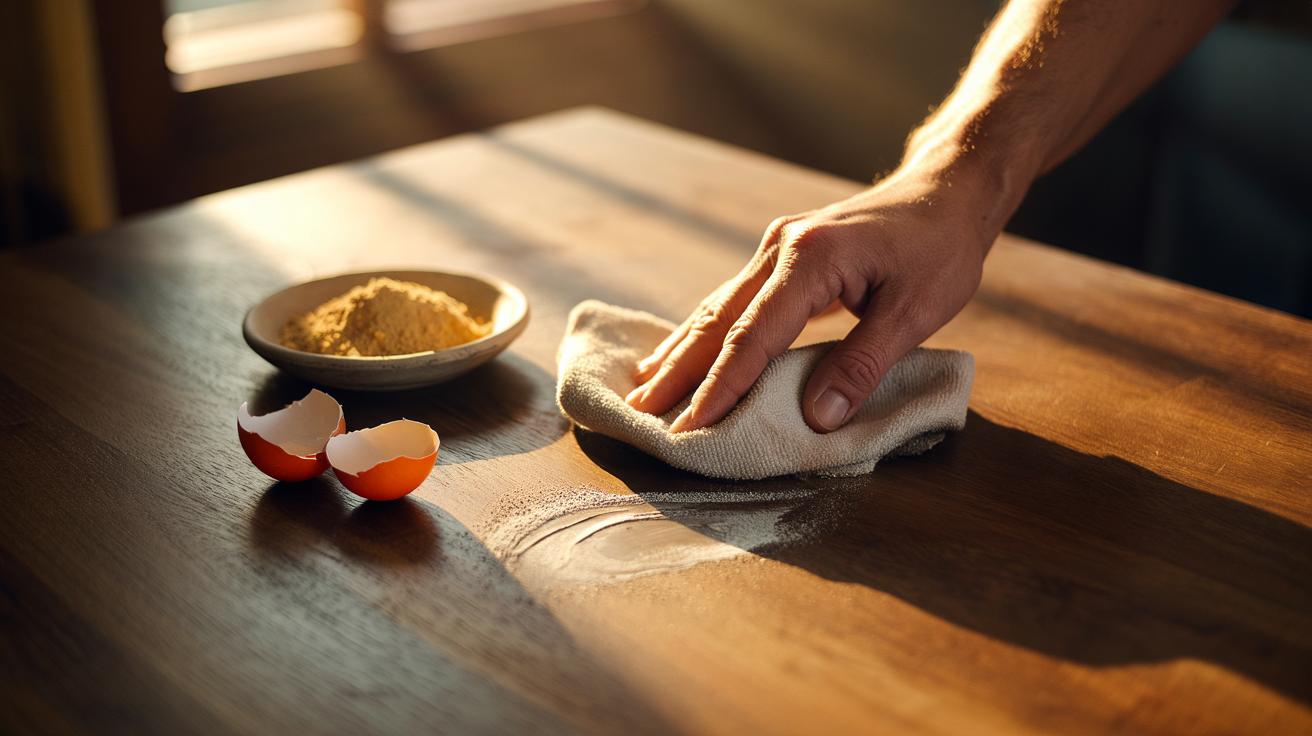
Start clean. Dust the area and wipe with a barely damp cloth; let it dry. Take a thoroughly dried eggshell (air-dried overnight or baked at 100–120°C for 10 minutes to sanitise), crush it between spoon bowls or in a mortar until you have a fine powder. Place a pinch on a soft microfibre cloth. For oiled or waxed finishes, add a tiny drop of mineral oil or olive oil; for lacquered or polyurethane finishes, use a single drop of water instead to avoid excess slip.
Work the cloth with feather-light pressure, moving with the grain for 15–20 seconds. Pause, wipe away residue, and check. If the scratch still flashes under light, repeat for another short pass. Finish by buffing dry with a clean section of cloth until the surface looks even and the shine returns. Stop as soon as the mark blends; the trick is subtlety, not removal. If you like, seal the area with a whisper of beeswax or microcrystalline wax to lock in the improved sheen.
| Finish Type | Liquid to Pair | Pressure & Time |
|---|---|---|
| Oiled/Waxed | Tiny drop of mineral/olive oil | Very light, 15–30 sec |
| Lacquer/Polyurethane | One drop of water | Feather-light, 10–20 sec |
| Shellac/French Polish | Dry or a breath of water | Whisper-light, test first |
Finishes, Limitations, and Cautions
Test first on an inconspicuous spot. Dark, open-pored timbers—think oak stained near-black—can trap white powder in pores. Using a micro-drop of oil helps bind the powder and prevents residues. On satin and matte films, the result is usually excellent; on piano-gloss surfaces you risk faint hazing if you overwork. Do not use on high-gloss piano finishes or French-polished antiques without expert advice. The aim is to soften a visual scratch, not to cut through a protective coating.
Sanitation matters because raw shells can carry bacteria. Bake or air-dry thoroughly before crushing; keep your powder for a week in a labelled jar if you like, but discard if it clumps. Pair the technique with common-sense prep: remove gritty dust first, avoid cross-contamination from the floor, and use a clean cloth. Pressure is the variable that gets people into trouble; keep it lighter than you think, then stop.
Be realistic about scope. This hack excels at light, surface-level scratches and cloudy rings in wax. If your nail catches in the groove, you’re past cosmetic correction and into filling, levelling, and refinishing. Still, for quick spruce-ups before guests arrive, eggshell powder is a clever, sustainable stand-in for commercial polishing compounds—and it costs nothing but care and a minute of your time.
From kitchen waste to clever workshop ally, the humble eggshell earns its keep by gently perfecting how wood reflects light. You’ll save money, avoid harsh chemicals, and keep cherished pieces looking honest rather than over-refinished. Keep a jar of powder near your polishes, add a dab of oil or water as the finish dictates, and remember the golden rule: less is more. Work with the grain, work briefly, then walk away. What piece in your home is begging for a 30-second buff, and which finish will you try it on first?
Did you like it?4.2/5 (21)