In a nutshell
- 🍋 Citrus oils rich in d‑limonene dissolve greasy buildup, blur light scuffs, and restore a warm, low‑sheen glow to wood in about 3 minutes.
- 🧴 Follow the 3‑minute method: mix 4–5 drops lemon essential oil with 1 tsp carrier oil, wipe along the grain, then buff; use a fresh lemon peel on stubborn spots and always patch test.
- 🪵 Best on sealed finishes (polyurethane, lacquer) and most oiled woods; use caution on unfinished pine, antique shellac, and painted surfaces to avoid clouding or darkening.
- 🛡️ Keep it safe: avoid water-based mixes, buff to a dry finish, ventilate if sensitive to scent, and store blends properly; apply weekly on high-touch areas, monthly elsewhere.
- 🌿 A greener shine: biodegradable d‑limonene replaces silicone-heavy polishes, delivering a smooth, residue-free finish with a clean scent that fades quickly.
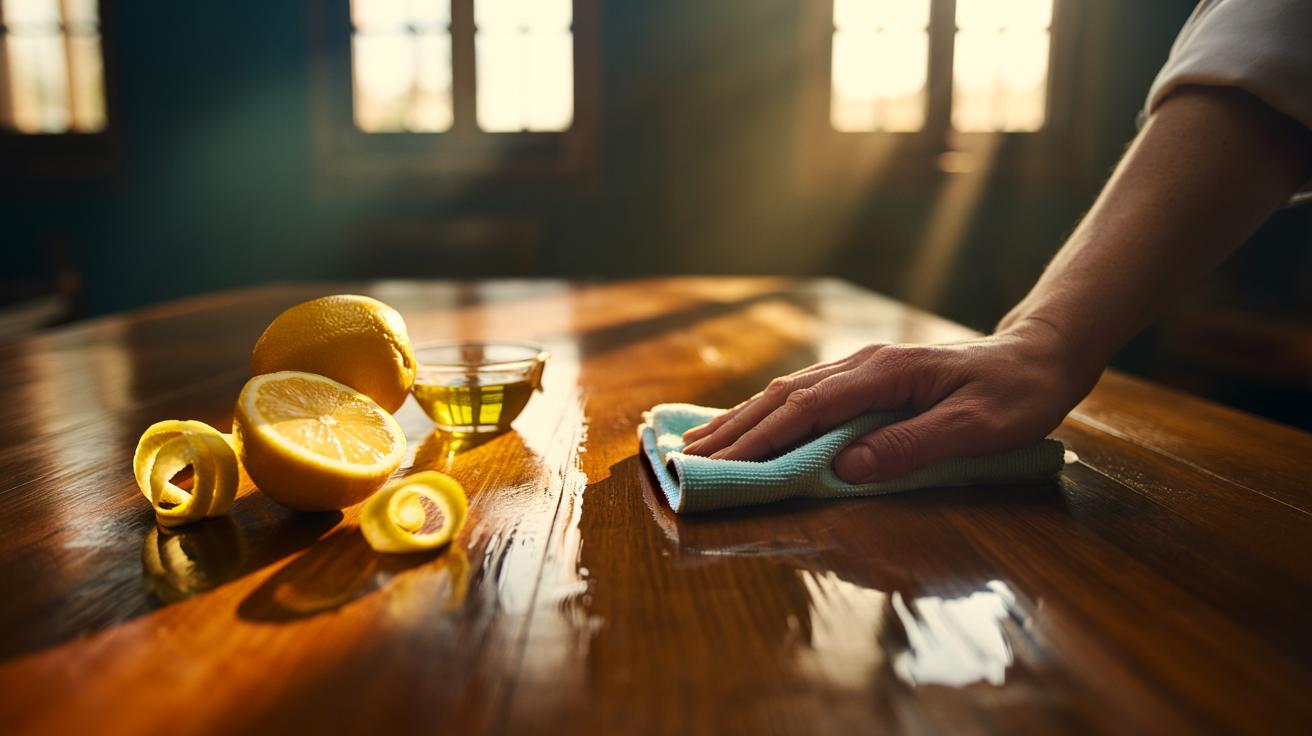
Lemon has long been a quiet hero in the British cleaning cupboard, but its role in rescuing tired timber deserves headline status. In minutes, not hours, citrus oils can lift greasy buildup, blur light scuffs, and bring out the warm glow that makes wood feel alive. The trick isn’t harsh scrubbing. It’s chemistry and finesse. A few strategic drops and a swift buff can restore shine in roughly three minutes, leaving a fresh scent and a subtle, satiny finish. Whether you’re refreshing a vintage sideboard or a modern oak table, the lemon-led approach is quick, satisfying, and surprisingly professional in its results.
Why Citrus Oils Make Wood Glow
The secret sits in the peel. Lemon contains d-limonene, a powerful, plant-derived solvent that dissolves greasy fingerprints and dulling residues without stripping most finishes. It cuts through silicone haze from old polishes and lifts micro-grime embedded in the grain. At the same time, a few drops of a light carrier oil—think jojoba or fractionated coconut oil—recondition the surface, softening the look of micro-scratches and reviving depth. It’s a clean-and-feed routine in one motion.
Wood hates excess moisture. That’s why pros reach for lemon essential oil or the natural oils in fresh peel rather than raw juice, which introduces water and acidity. The oils flash off quickly, leaving a low-sheen patina rather than a greasy film. There’s a tactile change, too: the piece feels smoother, less draggy under the hand, the grain subtly defined as light reflects cleanly across it.
Results are fastest on sealed finishes—polyurethane, lacquer, factory veneer—where the citrus lifts surface film and the carrier oil adds a whisper of gloss. On oiled woods, the effect is deeper, nudging richness without darkening. The magic is minimal input, maximum uplift.
The 3-Minute Method, Step by Step
Gather a soft, lint-free cloth, lemon essential oil (or the zest side of a fresh peel), and a light carrier oil. Mix 4–5 drops of lemon oil into a teaspoon of carrier oil. No bowl needed; you can blend on the cloth. Always start with a discreet test patch. If the finish clouds or smears, stop.
Minute 1: Lightly dab the mixture onto the cloth—never directly on the surface—and wipe along the grain. Move briskly. You’re loosening old polish and lifting grime, not soaking the timber. Minute 2: Switch to a clean section of cloth and buff. Small circles, then long strokes with the grain. You’ll see the bloom return as residues vanish and the oil levels faint abrasion.
Minute 3: For extra pop, glide the inside of a fresh lemon peel across stubborn patches; the peel’s natural oils release on contact. Immediately buff dry. Shine should appear uniform, tactile, and residue-free. If needed, repeat sparingly on traffic zones—table edges, drawer fronts, chair arms. The goal is a crisp, revivified sheen, not a slick finish.
What Works on Which Wood
Compatibility matters. Citrus oils excel on sealed surfaces and most oil-finished furniture, but delicate coatings and raw timber require caution. Use the table below to match treatment to material. When in doubt, patch test beneath or behind the piece.
| Wood/Finish | Citrus Suitability | Notes |
|---|---|---|
| Oak (polyurethane) | Excellent | Quick shine and de-greasing; low risk of streaks. |
| Walnut (oiled) | Good | Deepens tone slightly; use minimal oil for a dry-touch finish. |
| Pine (unfinished) | Caution | Can spot-darken; use peel buff only, then dry cloth. |
| Teak (oiled) | Good | Restores lustre; avoid over-application to prevent tackiness. |
| Veneer (factory finish) | Excellent | Light, fast passes; avoid soaking edges. |
| Antique shellac | Caution | Very gentle buff only; test meticulously. |
| Painted wood | Limited | May dull matte paint; spot-clean fingerprints only. |
Remember, engineered flooring and wax-heavy finishes behave differently. Citrus can still lift haze, but use a featherlight touch and buff until the surface is completely dry. The right pressure is as important as the right product.
Safety, Scent, and Sustainability
Keep it simple. A tiny blend—about 5 drops of lemon oil to 1 teaspoon of carrier oil—is sufficient for a coffee table. Avoid citrus plus water mixes on wood; they raise grain. Always buff to a dry, slip-free finish, especially on handrails and desktops. Ventilate if you’re sensitive to fragrance, and store any leftover mixture in a dark glass bottle for up to a month.
There’s a green dividend. Citrus-derived d-limonene is biodegradable and replaces silicone-heavy polishes that can smear and attract dust. Peel-rub methods use what you already have, turning kitchen scraps into a quick maintenance tool. The fragrance? Clean, bright, gone within the hour. No cloying residue, no waxy drag.
Mind the edge cases: fragile antiques, flaking finishes, or heat-ring damage may need specialist care. For everyday surfaces, though, the three-minute citrus refresh is a safe, repeatable routine that keeps wood camera-ready. Use weekly on high-touch areas, monthly elsewhere, and your furniture will hold its sheen with less effort and fewer products.
Lemon doesn’t just perfume a room—it reawakens wood. With a gentle solvent action and a nourishing glide, citrus oils strip away dullness and leave a fine, dry-touch sheen that feels authentically cared for, not lacquered. The method is fast, the tools are everyday, and the results are addictive. Three minutes, a cloth, and a peel can rescue a table before guests arrive. Ready to trade heavy polishes for a brighter, lighter routine—and which piece in your home would you revive first?
Did you like it?4.5/5 (23)