In a nutshell
- 🔬 The chemistry: baking soda (bicarbonate of soda) is a mild alkali that helps saponify fatty residues; its fine grit provides micro‑abrasion, and its buffer action keeps cleaning power steady—why surfaces sparkle in about 5 minutes.
- 🧽 Quick method: mix 2–3 tbsp baking soda + 1 tsp washing‑up liquid + warm water; spread a thin paste, allow 3–5 minutes dwell, agitate lightly, then rinse and buff (follow the grain on stainless steel).
- 🍳 Where it shines: cooktops, sinks, tiles, painted cupboards, oven glass, and extractor hoods—use tailored thickness and timing, and always finish with a clean water rinse for a streak‑free shine.
- ⚠️ Smart safety: test first; go gently on soft aluminium, high‑gloss acrylics, and polished stone; don’t mix with acids or bleach; avoid spray bottles; use gloves and ventilation when tackling rancid grease.
- ♻️ Practical wins: for extreme build‑up, washing soda is stronger (use selectively); for daily upkeep use mild surfactants—this approach is low‑cost, effective, and kinder to your home and drains.
Five minutes. That is all a humble kitchen staple needs to erase weeks of oily build-up and leave countertops gleaming. The hero is baking soda—or, as many British households call it, bicarbonate of soda. In an age of complex formulas and pungent sprays, its quiet chemistry delivers swift results with minimal fuss. A gentle alkali, a fine mineral powder, a reliable odour neutraliser—its virtues combine into a potent degreaser that costs pennies. Apply, wait, wipe: a simple ritual that turns tacky films into rinseable residue. Tested in busy family kitchens, rental flats, and tired student digs, this method wins for speed, safety, and that unmistakable just-scrubbed sparkle.
The Science Behind Baking Soda’s Fast Degreasing
At heart, bicarbonate of soda is a mild alkali (pH roughly 8.3). That matters because grease—composed of triglycerides and free fatty acids—softens faster in slightly alkaline conditions. The powder helps saponify trace fatty acids, nudging them towards a soap-like state that rinses away easily. Not an industrial caustic. Just enough push to tip the balance. Give it a brief dwell time and it loosens oily films so a quick wipe finishes the job. This is why five minutes is often plenty.
Equally important is texture. Baking soda’s crystals are tiny and hard, providing a form of micro‑abrasion that lifts clinging residues without scouring most hard surfaces. When paired with warm water and a drop of washing‑up liquid, you get a one-two punch: the alkali weakens the grease matrix; the surfactants emulsify what breaks free. Warmth speeds diffusion and reduces viscosity, so the mixture seeps into corners and along the microscopic ridges that trap grime.
There’s also a clever bonus: bicarbonate acts as a buffer, maintaining a mildly alkaline solution even as soils dissolve. That stability makes performance predictable. You apply a thin paste, wait, and the chemistry steadily does its work instead of fizzling out. Less scrubbing, more science-backed softening.
A 5-Minute Method: Step-by-Step Recipe
Start with a simple paste. In a small bowl, combine 2–3 tablespoons of baking soda with a teaspoon of washing‑up liquid and enough warm water to form a spreadable cream. For vertical tiles or cooker backsplashes, make it slightly thicker so it clings. Thin layers clean faster than gloopy mounds. Optional: add a teaspoon of table salt for stubborn carbonised splatters, but avoid it on glossy plastics. If odours are an issue, a separate rinse with diluted white vinegar afterwards helps—use it after, not mixed in, to keep the alkalinity effective.
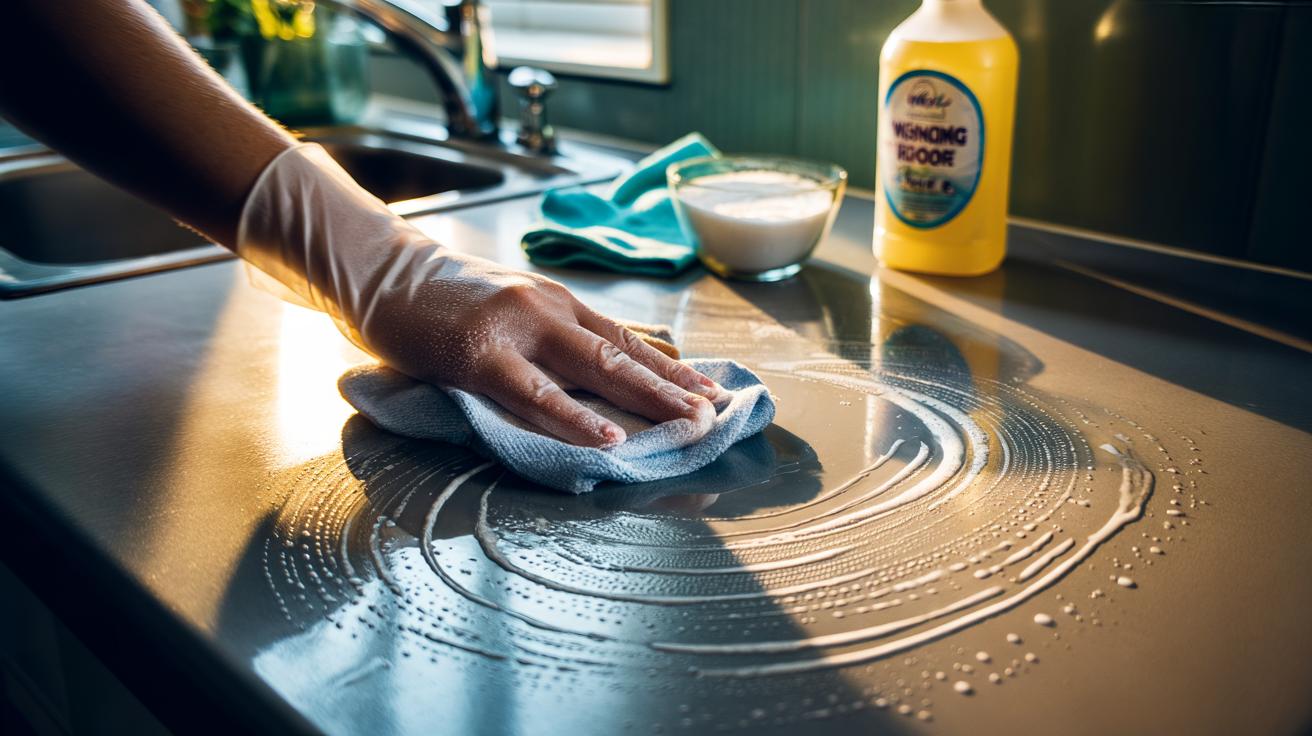
Apply with a soft sponge or microfibre. Cover greasy areas evenly and leave for 3–5 minutes. That dwell time allows alkaline ions to penetrate and loosen soils. Now agitate lightly in small circles. Do not grind; let the paste glide. Wipe with a damp cloth, rinse with clean water, then buff dry to prevent streaks. On stainless steel, always follow the grain. Where build-up is heavy—oven doors, extractor hoods—repeat once rather than scrubbing hard the first time.
For speed, break big jobs into zones. While one area rests, you’re applying the next. By the time you return, the chemistry has already done the heavy lifting. It feels almost unfair: five minutes of waiting, one minute of wiping, and an instant reveal. Grease structures collapse, surfactants capture them, and the rinse carries everything away.
Where It Shines: Kitchens, Ovens, and Beyond
This paste impresses across a surprising range of household surfaces. Cooktops, enamel trays, ceramic tiles, stainless steel sinks, painted cupboard fronts, and sealed worktops respond beautifully. On oven doors, the mild micro‑abrasion lifts the amber haze that clouds tempered glass. On extractor hoods and splashbacks, the alkali loosens the sticky film that traps dust. On plastic light switches and fridge handles, use a looser mix and a feather‑light touch. Rinse promptly. For delicate finishes—acrylic gloss cabinets, lacquered metals—test on an inconspicuous patch first.
Use case quick guide below. Adjust ratio and wait times to suit the soil, not just the surface. Short waits for fresh splatters; longer for baked-on grime. Always finish with a clean water rinse and dry buff to prevent mineral spotting and to enhance the shine.
| Surface | Mix & Ratio | Wait Time | Notes |
|---|---|---|---|
| Stainless steel sink/hob | Thick paste (2–3 tbsp soda + 1 tsp washing‑up liquid) | 3–5 mins | Wipe with the grain; rinse and buff dry |
| Oven door glass | Thick paste; warm water | 5–10 mins | Repeat lightly rather than scrubbing hard |
| Ceramic tiles/grout | Medium paste | 5 mins | Soft brush on grout, then rinse well |
| Painted cupboards | Thin slurry | 2–3 mins | Gentle pressure; avoid glossy lacquer wear |
| Extractor hood/filter | Paste for hood; hot soak for filters | 5–15 mins | Rinse filters thoroughly; air‑dry fully |
Safety, Surfaces, and Smart Substitutions
Despite its gentleness, bicarbonate deserves respect. Avoid extended contact on soft aluminium, high‑gloss acrylics, and delicate lacquered finishes. On natural stone like marble or limestone, the alkali is less risky than acids, but the grit can dull a polished seal—use a very thin slurry and minimal pressure, then rinse thoroughly. Always test first. Keep the paste off open electrical components and unsealed wood. If you need fragrance, add a drop of mild essential oil to the wash water after rinsing, not to the paste itself.
Do not decant into pressurised spray bottles; it settles and can clog triggers. Store the dry powder in an airtight container and mix fresh each time; it’s faster and more effective. Avoid combining in the same container with chlorine bleach or acidic products. Separate steps are fine—alkaline clean, rinse, then an acid rinse if desired—but never co‑mix. For those with sensitive skin, thin gloves prevent dryness. Ventilation helps when tackling old, rancid grease that releases odours as it loosens.
If supply runs low, a near‑neighbour is washing soda (sodium carbonate). It’s stronger and cuts baked-on grime faster, but it’s also harsher; reserve it for cookware or oven racks, not painted cupboards. For daily maintenance, a diluted washing‑up liquid spray handles fresh splashes, while baking soda shines as your weekly reset—five measured minutes for a visible, gratifying upgrade.
In an era of overcomplication, this quiet alkali proves that simple chemistry and a bit of patience can outpace pricey sprays. The reward is tangible: cleaner lines, brighter metal, fewer odours, and a sink that beads water again. Let the paste sit, wipe lightly, rinse, and buff—the sparkle arrives on schedule. As energy bills and grocery costs bite, a tin of bicarbonate of soda pulls double duty: clean home, low spend, minimal residues down the drain. Where will you try this five‑minute degreaser first, and what surface surprised you most?
Did you like it?4.7/5 (29)