In a nutshell
- 🍵 Use a tea bag and hot water to revive burnt pans in 3 minutes: submerge the scorched area, simmer or steep, then nudge with a wooden spatula for an easy lift.
- 🧪 The science: tea’s tannins (astringent polyphenols) disrupt proteins and oxidised fats, lower surface tension, and lightly bond with metal ions (chelation) to weaken residue adhesion.
- 🥘 Best matches: stainless steel and enamel excel; use off‑heat steeps for non-stick; keep contact brief on aluminium; avoid simmering tea in cast iron to protect seasoning.
- ⏱️ Practical tips: choose black tea for higher tannins, repeat once for heavy scorch, add a pinch of bicarbonate of soda for stubborn polymerised oils, and skip steel wool.
- 💷 Payoff: a gentle, low-cost method that cuts scrubbing time, preserves cookware, and avoids harsh chemicals—quick, effective, and kitchen‑cupboard simple.
Every cook knows the horror: a moment’s distraction, a pan scorched with a tar-black film that seems welded to the metal. Before you reach for harsh chemicals or bin the pot, try a gentle trick that readers across the UK swear by. Drop in a humble tea bag, add hot water, and watch the damage soften. In minutes, the grim layer loosens and lifts. The secret is chemistry, not magic. Tea’s natural compounds attack the bonds that make burnt residue cling, so the mess slides off with minimal effort. Below, we explain the three-minute method, the science behind it, and the types of pans that respond best.
The Three-Minute Tea Bag Method
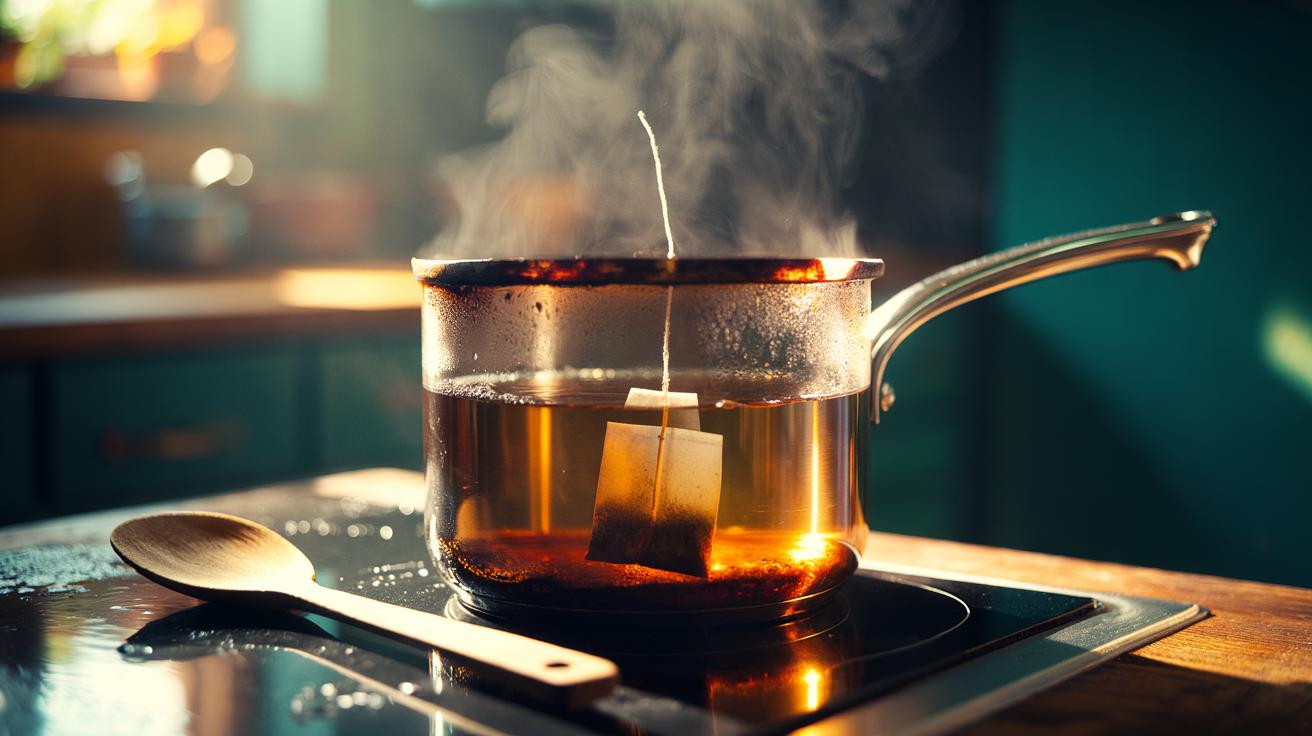
Clear any loose flakes first. Place one tea bag—black tea works best—right on the scorched zone. Pour freshly boiled water until the burnt ring is fully submerged by a centimetre. For stainless steel and enamel, simmer gently for three minutes; keep the water just trembling, not rolling. For non-stick or thin aluminium, kill the heat and cover; the retained heat does the same job without stressing coatings. It works in as little as three minutes because hot water rapidly pulls tannins into solution, and those compounds pry residue from the metal.
After the steep, nudge the edge of the burnt patch with a wooden spatula. You’ll feel the grip loosen. Swirl the tea, pour off the dark liquid, and rinse. Stubborn spots? Repeat once, or add a pinch of bicarbonate of soda during the second steep to help undercut grease. Avoid steel wool unless absolutely necessary. Finish with a regular wash and a brief dry on the hob to prevent water marks. This quick routine is gentle, cheap, and surprisingly thorough.
Why Tannins Loosen Carbonized Residue
The headline actor is tannins, the naturally astringent polyphenols in tea. These molecules latch onto proteins and oxidised fats within the burnt crust, disrupting the gluey network that anchors it to the pan. They also form light complexes—think tiny handshakes—with trace metal ions at the surface, a mild chelation effect that weakens the residue–metal interface. The result is not dissolution of carbon, but strategic undermining of the adhesion points that keep the black film stuck fast.
Heat accelerates extraction and mobility. At near‑boiling temperatures, tea’s catechins and theaflavins flood the water, lowering surface tension so liquid creeps under the burnt layer. This creeping action is crucial: once water infiltrates, steam expansion and gentle agitation lift the sheet like wallpaper. Tea is slightly acidic (roughly pH 5–6), which can help hydrolyse browned sugars and denature residual proteins, further loosening the matrix. The three-minute window aligns with fast extraction kinetics—most of the relevant compounds arrive in solution quickly—so you get maximal loosening with minimal time on the hob.
Which Pans and Stains Respond Best
Not all cookware is equal. Stainless steel and enamel respond brilliantly; so do glass and ceramic casseroles. For non-stick pans, avoid active boiling and opt for an off‑heat steep to protect the coating. Bare aluminium mellows nicely with a gentle steep, but don’t let acidic tea sit for ages. The outlier is cast iron or seasoned carbon steel: the tea’s acidity can nibble at your hard‑won seasoning. Do not simmer tea in a seasoned skillet; wipe, add hot water off‑heat, and keep the contact brief if you must try it at all.
| Pan Material | Heat/Time | Tea Choice | Notes |
|---|---|---|---|
| Stainless Steel | Gentle simmer, ~3 min | Black (high tannins) | Excellent bond release; repeat if heavy scorch |
| Enamel/Glass | Simmer or covered steep, 3–5 min | Black or green | Avoid thermal shock; let cool gradually |
| Non-stick | Off-heat steep, 5 min | Mild black | No scouring pads; wooden spatula only |
| Cast Iron/Carbon Steel | Avoid simmering | Not recommended | Risk of seasoning loss; use salt paste instead |
As for stains, protein‑heavy burns (eggs, milk) and sugary caramelisation release fastest. Thick polymerised oils take longer; a second tea cycle or a bicarbonate sprinkle helps the peel effect.
There’s elegance in this hack: a teabag, some heat, and smart chemistry doing the heavy lifting while you put the kettle away. You cut scrubbing time, protect your cookware, and sidestep harsh cleaners that scar surfaces or leave odours. The payoff is speed—three minutes for the first big lift—and control, since you can repeat without damaging the pan. Will you try a strong Assam for speed or a gentler green for sensitive coatings, and what other quietly brilliant tricks are waiting in your kitchen drawer?
Did you like it?4.6/5 (30)