In a nutshell
- 🕒 Achieve softer laundry in 2–3 minutes at the end of the cycle using a sealed rice pouch to replace chemical softeners.
- 🍚 How it works: the pouch mimics a dryer ball, gently tapping and separating fibres to reduce stiffness without residues.
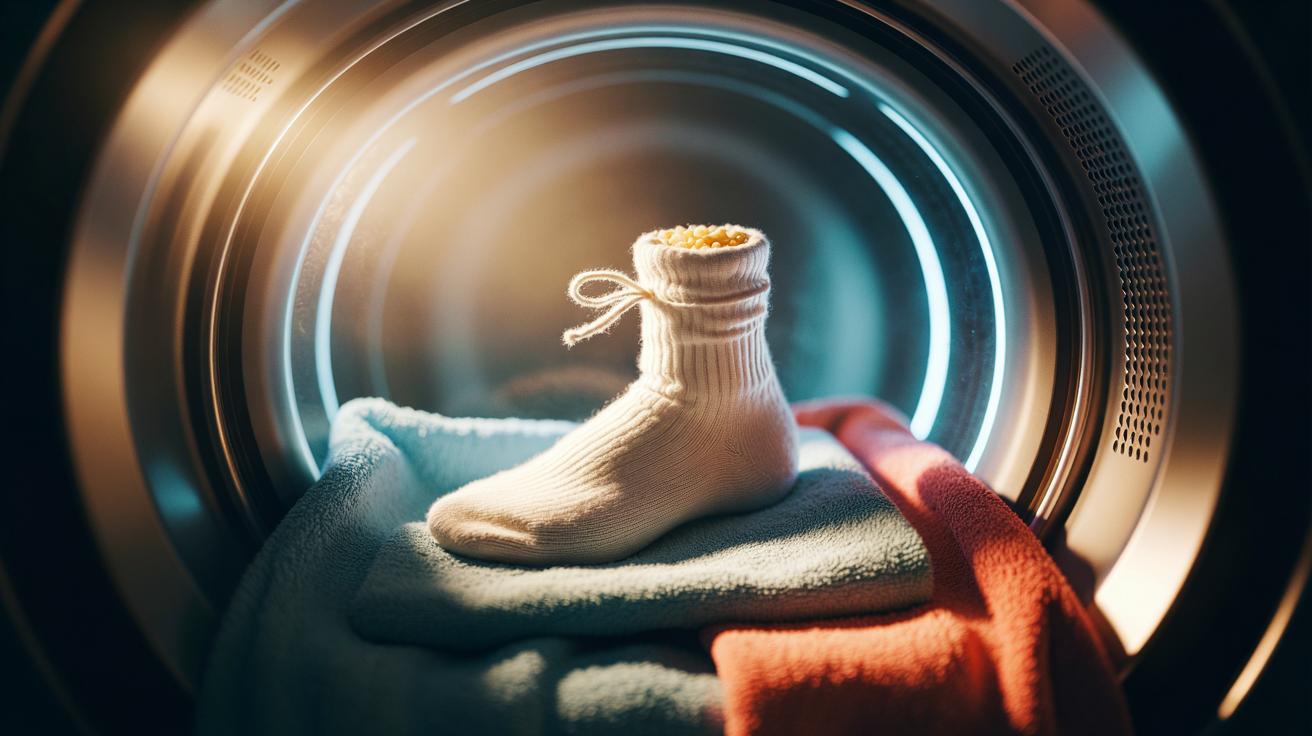
- 🛠️ Step-by-step: fill a tight cotton sock with 200–250 g uncooked white rice, knot securely, add to an almost-dry load on low/medium heat for 2–3 minutes.
- ⚠️ Safety & hygiene: keep sessions short, inspect the pouch, store dry, refresh rice periodically, and avoid use with delicates or damaged socks.
- 📊 Comparison & eco wins: rice offers low-cost, fragrance-free softness; dryer balls reduce time and static; chemical softeners add residues and cost—ideal is a hybrid, finishing with a brief cool-down.
Britain loves a thrifty hack, and few are thriftier than a jar of uncooked rice. Here’s the surprise: used properly, it can leave laundry noticeably softer in your tumble dryer in just two minutes, all without the usual chemical softeners. The trick isn’t magic; it’s physics. A small, sealed pouch of rice acts like a nimble, weighty companion in the drum, loosening stiff fibres and breaking up clumps that trap heat. In a short burst at the end of the cycle, that gentle thud-thud can make towels and T‑shirts feel newly fluffed. It’s fast. It’s cheap. And it’s kinder to skin and waterways.
Why Rice Works in the Tumble Dryer
The secret is mechanical, not mystical. A sock or pouch filled with uncooked rice behaves like a compact dryer ball. As the drum turns, hundreds of small kernels shift as one, creating a soft, rolling mass that repeatedly taps your garments. Those taps relax compressed fibres, disperse heat pockets and stop items from balling together. Result: fewer hard “boards” of cotton, more lift and flexibility in the weave. Softness is often less about perfume and more about how fibres are arranged after heat.
There’s another quiet benefit. Rice adds a subtle, stabilising weight that improves the tumble, especially in smaller loads that otherwise slither, stick and over-dry. By keeping fabric moving, the rice pouch helps reduce the stiff, papery feel that comes from prolonged hot friction. Importantly, the aim is not to dry further; it’s to finish better. A short, timed burst near the end is enough to coax texture back without baking in crispness. No residues. No synthetic coatings. Just the right nudge from a humble grain.
Step-by-Step: The Two-Minute Rice Method
First, gather a clean, tightly woven cotton sock (or small muslin bag) and 200–250 g of uncooked white rice. Avoid flavoured or instant rice. Fill the sock, tie a secure double knot, and check there are no holes. You want a firm, fist-sized pouch; not floppy, not rock-hard. Grains must never escape into the drum. Keep the load modest—towels, tees, pillowcases—and ensure items are already almost dry.
Set your dryer to low or medium heat for 2–3 minutes. Add the rice pouch and start the cycle. Listen: that soft percussion is the point. It loosens stiff panels, opens fibres and improves drape. For heavy cottons, another 60 seconds can help, but resist the urge to overdo it. Remove the pouch promptly, shake out the garments, and fold while warm. If you’re tending delicates, stick to the cool-down phase only, or skip the rice altogether. When in doubt, check your care labels—the garment rules always win.
Safety, Hygiene, and Environmental Notes
Safety first. Use only uncooked, dry rice in a sealed cotton pouch. Inspect the fabric and knot regularly; replace at the first sign of wear. Keep sessions short—two to three minutes—especially on hotter machines. Never leave a rice pouch in for a full drying cycle. That’s unnecessary and increases the chance of scorching or seam failure. Clear the lint filter before you start. If any grain escapes, stop the machine and remove it immediately.
Hygiene matters too. Store your rice pouch in a dry jar between uses to prevent musty odours. Refresh the contents every few months or after ~20 uses. If you’re sensitive to dust, give the pouch a quick shake outdoors before each run. Environmentally, the case is strong: no synthetic fragrances, far fewer microchemical residues, and near-zero cost per cycle. For baby clothes or eczema-prone skin, this fragrance-free approach can be a relief. If your chief gripe is static, consider pairing the rice pouch with wool dryer balls or stopping the heat earlier—static builds when fabrics are over-dried.
How It Compares: Rice, Dryer Balls, and Chemical Softeners
Choosing the right softening strategy depends on what you value—touch, scent, skin-friendliness, or simplicity. Here’s the quick view.
| Method | Time Used | Softness Effect | Static Control | Cost per Use | Caveats |
|---|---|---|---|---|---|
| Rice pouch | Last 2–3 minutes | Good on towels, tees | Moderate (best if not over-dried) | Pennies | Must secure pouch; short bursts only |
| Wool dryer balls | Full cycle | Good, consistent fluff | Good, reduces cling | Low over lifespan | Light thumping noise |
| Chemical softeners | In wash or dryer | Soft feel + fragrance | Good, but residue-based | Ongoing | Residues, potential skin/eco concerns |
| Vinegar (rinse) | Wash stage | Milder hand, fewer residues | Moderate | Low | Check machine warranty; avoid overuse |
Rice delivers a quick, targeted improvement at the finish line. Think of it as a “softness nudge,” not a perfume bomb. Dryer balls, by contrast, work throughout the cycle, lifting and separating fabrics to cut drying time and reduce static. Softeners wrap fibres with agents that feel silky but can clog towels and irritate some skin. For many households, the sweet spot is hybrid: stop the heat a touch earlier, toss in a short rice burst, then finish with a brief air-only cool-down. Soft to touch, light on chemicals, easy on the bill.
In an era of rising bills and shrinking patience, a humble rice pouch earns its keep: kinder textures, fewer residues, and a ritual that takes less time than boiling the kettle. It won’t perfume your wash, and it won’t fix every fabric, but for everyday cottons it’s a quiet game-changer. The price is right. The method is simple. And the control is entirely yours. Will you give the two-minute rice test a spin this week—and if you do, which item in your basket will you try it on first?
Did you like it?4.6/5 (22)