In a nutshell
- 🍵 Black tea’s tannins (mild acidity, ~pH 5) cut greasy microfilm and optically smooth micro-scratches, delivering a natural low-lustre sheen without sticky residue.
- ⏱️ Ten-minute routine: brew 3–4 bags per litre for 5 minutes, cool to warm, dust first, mop with nearly dry microfibre, allow 1–2 minutes contact, then buff dry.
- 🪵 Works on sealed hardwood, laminate, vinyl/LVT, and ceramic/porcelain; avoid marble/limestone/travertine and unfinished wood, and wipe grout promptly to prevent tinting.
- 💷 Costs pennies per clean, reduces chemical load and fragrance, and supports a sustainable routine with quick drying and crisp, clean-looking floors.
- 🛠️ Tips: test a hidden spot, wring hard to prevent streaks, add a single drop of mild detergent for greasy zones, spot-buff heel marks, and keep pets off until dry.
British households have long turned to tea for comfort, but that humble bag can also rescue a tired-looking floor in record time. This quick, thrifty trick is making a comeback because it works across common surfaces, needs no fancy kit, and leaves a crisp, natural sheen rather than a greasy glare. In ten minutes flat you can cut through film, refresh colour, and make scuffs less obvious. It’s not magic. It’s chemistry. The secret lies in the tannins of strong black tea, a mild, plant-based polish that plays beautifully with sealed wood, laminate, vinyl, and ceramic. Used correctly, tea bags deliver a fast, low-cost reset that looks like a professional buff.
Why Tea Works on Dull Floors
Here’s the science in plain terms. Black tea is rich in polyphenolic tannins, which are mildly acidic and naturally astringent. That gentle acidity helps to loosen the greasy microfilm that builds from soaps, oils, and airborne kitchen residue. At the same time, tea’s fine organic compounds lay down a whisper-thin layer that optically smooths tiny scratches, especially on darker sealed woods and aged laminates. The result? A soft, low-lustre sheen rather than a shiny plastic glare. It looks clean because it is.
There’s also a practical edge. A warm tea rinse slightly reduces surface tension, so dirt releases more easily and buffing takes less elbow grease. No residue, no tackiness. Because tea is only mildly acidic (roughly pH 4.9–5.5 when brewed strong), it’s far gentler than many off-the-shelf floor sprays yet tough enough to cut the film that dulls finishes. On light floors the faint amber tone can subtly warm the colour; on darker floors it can minimise the look of micro-scuffs. It’s a quiet upgrade you notice when daylight hits just right.
The 10-Minute Method, Step by Step
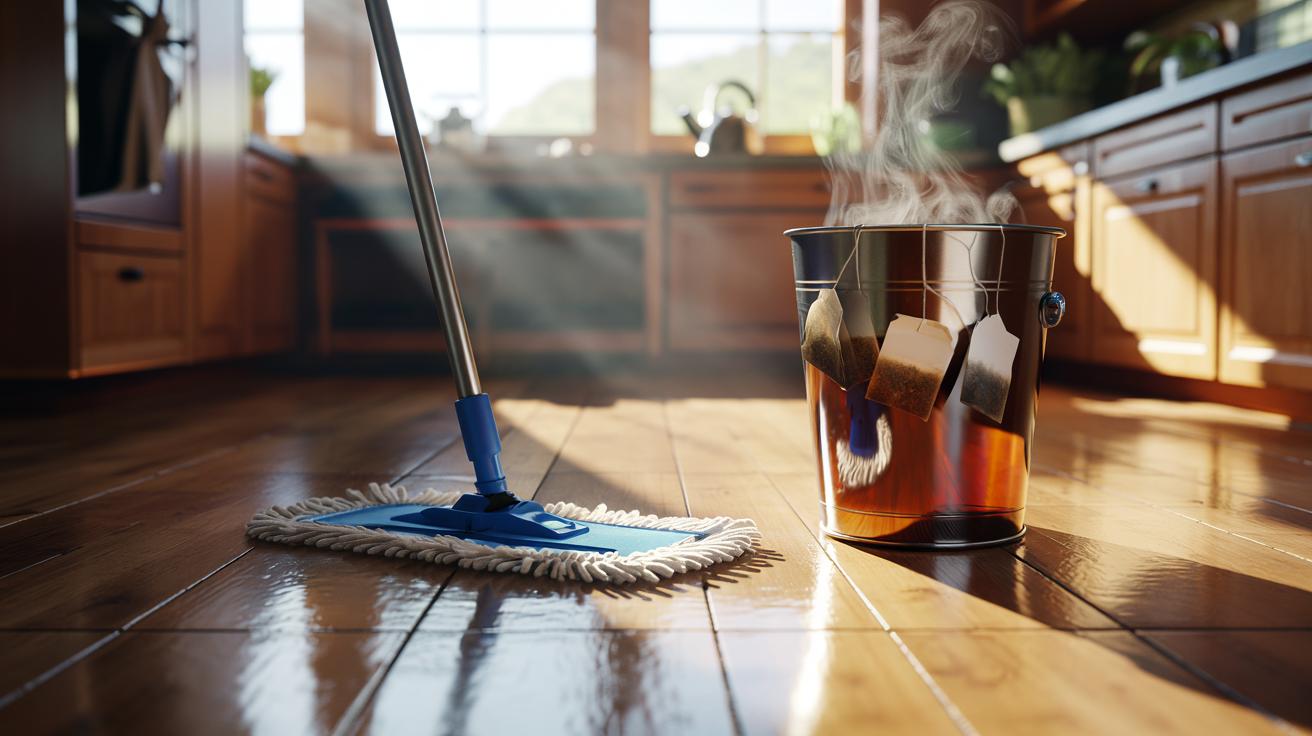
Speed matters on a busy weekday. Here’s a clean, repeatable routine that fits into a tea break. Boil the kettle, drop in 3–4 black tea bags per litre of hot water, and steep for five minutes. Remove the bags and let the brew cool until warm to the touch. While it cools, dry-dust or vacuum the floor. You need to banish grit before liquid hits the surface. Always test in an inconspicuous corner first, especially on light finishes or floors with uncertain sealing.
Dip a clean microfibre mop into the warm tea, wring until almost dry, and work in one-square-metre sections. Allow one to two minutes of contact for the tea to loosen residue. Then buff immediately with a second, dry microfibre cloth. Stubborn heel marks? Dab neat tea on a cloth and spot-buff. For a greasy kitchen strip, add one drop of mild dish soap per litre; it boosts cutting power without leaving suds. Keep windows cracked for quick drying, and avoid soaking edges or unsealed thresholds. If the floor shows streaks, you’re using too much liquid—wring harder and slow the buff.
What You Can and Can’t Clean
Not every surface loves tea. Sealed wood, laminates, vinyl, and ceramic tiles respond brilliantly. Natural stone is different. Limestone, marble, and travertine are acid-sensitive; even mild tea can etch or stain them. Unfinished or heavily worn wood may absorb colour unevenly. Light grout can take on a faint tan if you leave tea to pool. When in doubt, patch-test, limit contact time, and buff dry promptly. Use fresh, unsweetened black tea—no milk, no sugar, no flavoured blends. Keep the method light and controlled, not wet and sloshy.
| Floor Type | Tea Strength | Contact Time | Buffing | Notes |
|---|---|---|---|---|
| Sealed hardwood | Strong | 1–2 min | Microfibre, firm pressure | Check finish; avoid gaps and edges |
| Laminate | Medium | 1 min | Light buff | Use nearly dry mop to prevent swelling |
| Vinyl/LVT | Medium-strong | 1–2 min | Moderate buff | Excellent for kitchen film |
| Ceramic/porcelain tile | Strong | 2 min | Focus on glaze | Wipe grout promptly to avoid tint |
| Marble/limestone/travertine | Do not use | — | — | Acid-sensitive: risk of etching |
| Unfinished wood | Not advised | — | — | May stain or raise grain |
Keep pets and children off the area until fully dry—damp floors can be slippery and attract fresh dust. If you want a touch more shine, do a second pass with plain hot water and a drop of alcohol to flash-dry, then a final microfibre buff. The headline advantage remains cost and clarity: pennies per clean, a fresher finish, and no lingering artificial fragrance. It’s a smart, sustainable hack that respects your floor’s existing seal rather than loading it with polymers.
In a world of over-engineered sprays, tea bags offer a modest, effective alternative that fits neatly into a Saturday tidy or a weeknight reset. You’ll see the difference in the way light moves across the planks, how edges look crisp, and how that dull, grey film simply vanishes. Done right, the treatment is quick, repeatable, and gentler on both surfaces and air quality than many perfumed cleaners. Ready to try the ten-minute tea trick on your own floors—or will you remix it with your favourite microfibre routine to push the shine even further?
Did you like it?4.5/5 (29)