In a nutshell
- 🧪 The science: lemon’s citric acid disrupts starch hydrogen bonds, chelates mineral “cement,” and limonene lifts oils—making rice stains release in ~30 seconds.
- ⏱️ The method: remove solids, blot with cool water, apply 1:2 lemon:water on fabrics (neat on non-porous), dab outside-in, wait 30 seconds, rinse, and launder—test an inconspicuous area first.
- 🛡️ Surface safety: avoid natural stone; dilute further and shorten contact on silk/wool; stainless is fine, carbon steel may darken; use microfibre for gentle mechanical lift.
- ⚠️ Persistent marks: clear starch first, then tackle pigments with oxygen-based bleach (colourfast fabrics), or a lemon + bicarbonate paste; enzymes help; never mix lemon with chlorine bleach.
- 🌿 Benefits and tweaks: speedy, precise, low-impact cleaning that can also de-scale light hard-water residue—adjust dilution and time to stain components for an eco-friendly kitchen win.
Rice is humble, yes, but its stains can be maddening. A speck of sticky starch on a white shirt. A ghostly smudge welded to a wooden spoon. Then there’s the trick that cuts through in half a minute: lemon. In kitchens across Britain, home cooks are discovering that a halved lemon or a splash of its juice makes the stubborn stuff let go. Fast. The reason is chemistry, not folklore. Here’s the simple science behind it, the precise steps that make rice stains vanish in 30 seconds, and the common-sense cautions that keep your fabrics, counters and kit safe while you work.
The Chemistry: Citric Acid Takes Apart Starch Gels
What makes dried rice cling is starch. When cooked rice cools and dries, its starches—mostly amylose and amylopectin—form a tight, glassy network of hydrogen bonds. This network grips fibres, wood grain and microscopic pores on utensils. Add a smear of oil from a sauce and a sprinkle of minerals from hard water, and the stain becomes a composite, surprisingly resilient. Lemon’s edge is its citric acid (and a little malic acid): it lowers pH to around 2, disrupting those hydrogen bonds and loosening the gel. In short, acid undermines starch’s gluey structure.
Two other assists matter. First, lemon chelates metal ions, so it frees calcium that can ‘cement’ grime to surfaces. Second, trace limonene from the zest—released if you press the peel—acts as a mild solvent for oil, so the stain’s greasy component loses its grip. Add gentle agitation and water, and you see results quickly—often in under a minute. Keep the stain damp; dried starch grips harder. This is why, under light dabbing or a soft brush, the stain seems to melt away. It isn’t magic. It’s targeted chemistry happening extremely fast.
Step-by-Step: The 30-Second Lemon Method
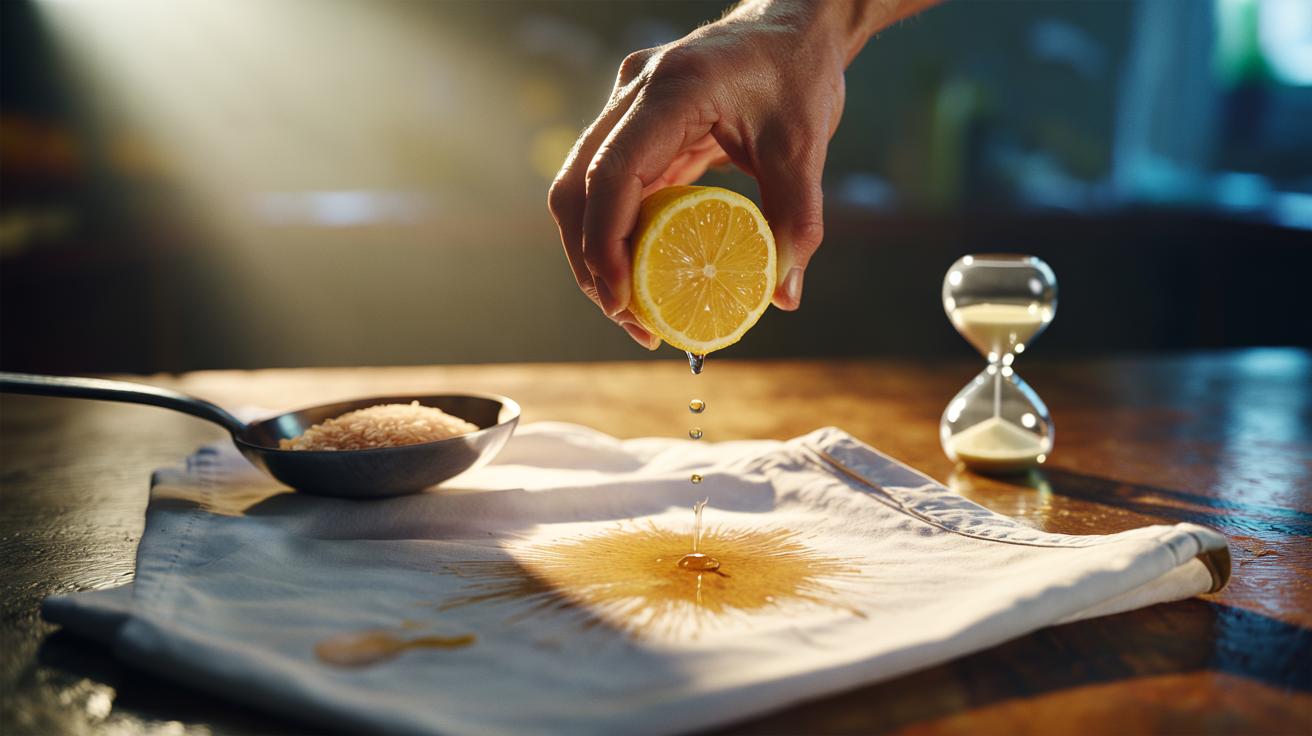
Speed depends on preparation. Start by removing loose solids with a spoon or blunt knife. Blot—don’t rub—with cool water to rehydrate the starch film without driving it deeper. Mix a quick solution: roughly one part lemon juice to two parts water for fabrics; straight lemon is usually safe on non-porous surfaces. Apply with a clean cloth or cotton pad, then wait. Thirty seconds is often enough. Dab from the outside in. Rinse well. For textiles, launder as usual. For utensils and counters, wipe with warm water and dry. Test on an inconspicuous area first.
On silk or wool, go gentler: halve the contact time, dilute further, and blot carefully. Avoid natural stone—marble, limestone, travertine—since acid can etch. On lacquered wood, keep contact brief and wipe dry promptly. Stainless steel is fine; carbon steel may darken. Microfibre cloths increase mechanical lift without scouring. If you’ve cooked in hard water, a quick lemon wipe can also de-scale light residues as it de-starches, saving elbow grease and time.
| Surface/Material | Dilution | Contact Time | Action | Notes |
|---|---|---|---|---|
| Cotton/Linen | 1:2 lemon:water | 30–60 sec | Blot, rinse, launder | Colourfast test advised |
| Silk/Wool | 1:3–1:4 | 15–30 sec | Gentle blot, cool rinse | Avoid aggressive rubbing |
| Stainless Steel/Ceramic | Neat | 20–30 sec | Wipe, rinse, dry | Excellent for de-gelling starch |
| Natural Stone | Not recommended | — | Use pH-neutral cleaner | Risk of etching |
| Lacquered Wood | 1:2–1:3 | 20–30 sec | Light wipe, dry | Do not soak |
What to Do When Stains Persist
Some rice stains aren’t pure starch. Think turmeric-spiked curry, soy, or tomato—pigments and tannins that outlast the glue. Deal with the starch first using lemon, then chase the colour. A non-chlorine, oxygen-based bleach (on colourfast fabrics) tackles dyes effectively. For whites, sunlight after rinsing can brighten. If you prefer mild measures, a paste of lemon and bicarbonate of soda adds fizz and lift—apply, wait 60–90 seconds, then rinse thoroughly. On cookware, a teaspoon of salt with lemon provides safe abrasion to nudge residue from microscopic pits without scratching.
Protein isn’t the issue here, so avoid hot water shocks that can cook contaminants into fibres. Lukewarm helps rehydrate and release. A biological detergent with amylase in the wash can finish the job by digesting remaining starch traces. If the stain is ancient, repeat the lemon step twice rather than extending a single soak; short, fresh applications work better than long acidic baths. Above all, stay safe. Never mix lemon juice with chlorine bleach. The combination can release hazardous gas. Always ventilate and rinse between products. With those rules, even obstinate marks yield quickly, and your kit stays pristine.
In kitchens, speed matters. Lemon gives you speed, precision and a light environmental touch, all in one small fruit. The acids loosen starch, the scent brightens the room, and your fabric or utensil is ready for dinner service again in a minute. Small method, big result. If you try the 30-second trick this week, note what else is in the stain—oil, spice, tannin—and tweak dilution and contact time accordingly. What’s your toughest rice-related mess at home, and how will you adapt the lemon method to crack it without breaking stride?
Did you like it?4.7/5 (22)